Tulsa race massacre reparations lawsuit survives motion to deny and will move forward, judge rules
Share
Explore Our Galleries









Breaking News!
Today's news and culture by Black and other reporters in the Black and mainstream media.
Ways to Support ABHM?
By Amir Vera, Omar Jimenez, Ashley Killough and Leonel Mendez, CNN
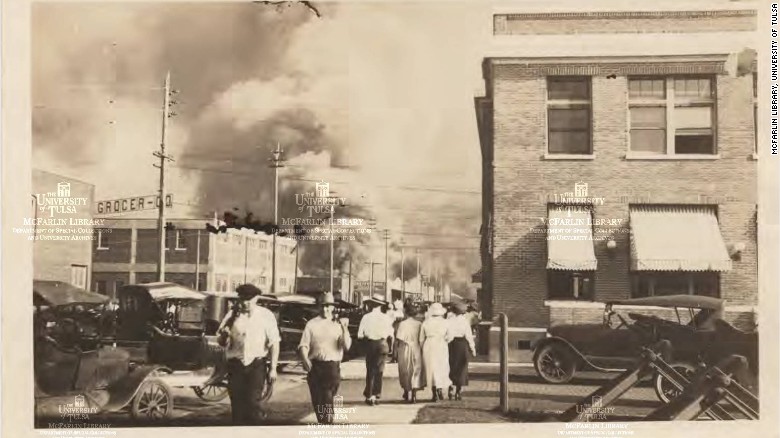
The plaintiffs in a lawsuit seeking reparations for the 1921 Tulsa Race Massacre celebrated a judge’s ruling on Monday when she allowed their case to move forward after defendants sought a motion to dismiss the case.
Judge Caroline Wall said the motion to dismiss was “granted in part” and “denied in part,” which essentially allows the case to proceed but it’s unclear what will happen next, including details on a potential trial, according to Michael Swartz, one of the attorneys for the plaintiffs.
The plaintiffs’ attorneys pleaded Monday afternoon for the judge to allow the case to move forward so the survivors and descendants of victims from the massacre could have their day in court, potentially their last chance to get some semblance of justice.
A packed courtroom in Tulsa erupted in cheers and applause at the judge’s ruling, including the three remaining survivors who are all over 100 years old and were in the courtroom for the hours-long hearing.
“I’ve never seen nothing like this happen,” said Hughes Van Ellis, a 101-year-old survivor of the massacre who told CNN he never lost hope.
“That means it’s going to change things. It’s going to make people think … It’s going to change, it’s going to be better for everybody,” said Ellis, who also goes by Uncle Red.
The lawsuit was filed in March 2021 and looks to not only set the record straight on what took place between May 31 and June 1, 1921, but also create a special fund for survivors and descendants of the massacre that left at least 300 Black people dead and the once-booming neighborhood of Greenwood destroyed.
Keep reading to learn why this trial is significant.
Learn more about Tulsa’s race massacre, which was erased from history books for decades.
Comments Are Welcome
Note: We moderate submissions in order to create a space for meaningful dialogue, a space where museum visitors – adults and youth –– can exchange informed, thoughtful, and relevant comments that add value to our exhibits.
Racial slurs, personal attacks, obscenity, profanity, and SHOUTING do not meet the above standard. Such comments are posted in the exhibit Hateful Speech. Commercial promotions, impersonations, and incoherent comments likewise fail to meet our goals, so will not be posted. Submissions longer than 120 words will be shortened.
See our full Comments Policy here.