Thinking of filming a police encounter in Arizona? Make sure it’s not within 8 feet.
Share
Explore Our Galleries









Breaking News!
Today's news and culture by Black and other reporters in the Black and mainstream media.
Ways to Support ABHM?
By Tat Bellamy-Walker, NBC News
Victims of police violence are worried about police accountability and justice if cellphone filming is banned.
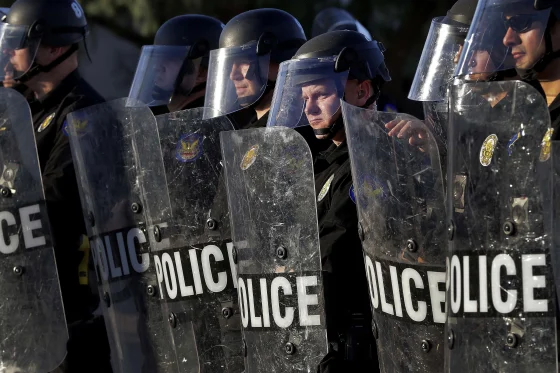
People who say they have faced violence for filming police interactions are condemning a law in Arizona that will restrict recording police officers from within 8 feet of police activity.
Without cellphone footage, victims said, it will be harder for residents to hold police accountable and seek justice in cases of police misconduct.
Mariah Hereford, 30, said police officers in Hemet, California, allegedly knocked her phone and her mother’s phone out of their hands and attacked them as they filmed authorities searching her fiancé’s car last year.
[…]
“As I was being attacked, I felt like I was going to be a George Floyd,” Hereford, a Black mother of four kids in Riverside County, California, told NBC News. “I thought I was going to die that night just from recording.”
[…]
According to the Arizona law, which was signed by Gov. Doug Ducey last week and goes into effect in September, a bystander could face a misdemeanor charge for recording a police officer within 8 feet of “where the person knows or reasonably should know that law enforcement activity is occurring,” the law states. According to the law, violators will face consequences if they continue to record officers after they are warned to back up.
Discover how this law will impact those who are intent on holding police accountable through video.
Without cellphone coverage, Americans wouldn’t have known about George Floyd’s murder, the officer wouldn’t have been convicted, the Black Lives Matter movement wouldn’t have expanded, and President Biden wouldn’t have signed an executive order about police reform.
Follow our breaking news section.
Comments Are Welcome
Note: We moderate submissions in order to create a space for meaningful dialogue, a space where museum visitors – adults and youth –– can exchange informed, thoughtful, and relevant comments that add value to our exhibits.
Racial slurs, personal attacks, obscenity, profanity, and SHOUTING do not meet the above standard. Such comments are posted in the exhibit Hateful Speech. Commercial promotions, impersonations, and incoherent comments likewise fail to meet our goals, so will not be posted. Submissions longer than 120 words will be shortened.
See our full Comments Policy here.