The Strangers by Ekow Eshun review – five Black pioneers
Share
Explore Our Galleries









Breaking News!
Today's news and culture by Black and other reporters in the Black and mainstream media.
Ways to Support ABHM?
By Colin Grant, The Guardian
From Malcolm X to Justin Fashanu, Eshun uses historical figures to illuminate contemporary struggles – and his own alienation
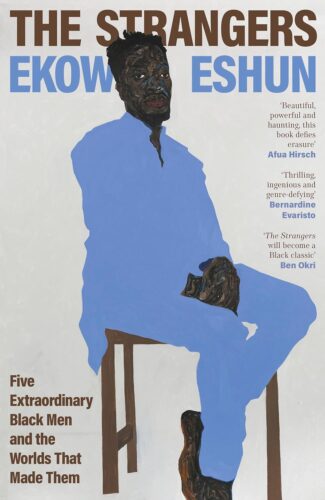
“All blacks in this country are condemned to be performers.” This is the thought, allegedly, of Ira Aldridge, a 19th-century black Shakespearean actor, who features in Ekow Eshun’s The Strangers. Why “allegedly”? Because there’s no record of Aldridge’s assertion. Eshun’s book, though, is not a novel; it’s “creative nonfiction”. This innovative approach, while successful, will nonetheless vex historians who wince at the use of speculation, rather than verifiable fact, in presenting the past.
Toni Morrison argued that black lives are “spoken of and written about as objects of history, not subjects within it”. How then to humanise and investigate the interior lives of historical figures in the absence of source material? It’s a dilemma addressed in Eshun’s hybrid of biography and memoir through an extraordinary feat of empathy. Along with Aldridge, Eshun takes four other black pioneers – Matthew Henson (an explorer), Frantz Fanon (a psychiatrist and thinker), Malcolm X (an activist) and Justin Fashanu (a footballer) – and writes about them using the second person. But he does it so intimately that “you” becomes a proxy for “I”.
In the chapter on Aldridge, his 1830s portrayal of Othello “causes only revulsion” in the mind of audiences who cannot accept “a full-blooded Negro, incarnating the profoundest creation of Shakespeare’s art”.
[…]
It’s surprising to learn that for much of his life Eshun, too, has felt misperceived. In decades past, as a cultural commentator – a favourite on the BBC’s Late Review, editor of Arena magazine and director of the Institute of Contemporary Arts – Eshun seemed to transcend race. But, lately, he has addressed it more directly as curator of exhibitions such as In the Black Fantastic and The Time Is Always Now. He is alive to the way in which every Black man is “heir to [a] legacy of caricature, which renders him simultaneously invisible and hypervisible”.
The review explains how Eshun’s book ensures author and subjects won’t be invisible.
Our online exhibits show how Black men have faced racism through the ages.
Stop by our breaking news archive for more articles like this.
Comments Are Welcome
Note: We moderate submissions in order to create a space for meaningful dialogue, a space where museum visitors – adults and youth –– can exchange informed, thoughtful, and relevant comments that add value to our exhibits.
Racial slurs, personal attacks, obscenity, profanity, and SHOUTING do not meet the above standard. Such comments are posted in the exhibit Hateful Speech. Commercial promotions, impersonations, and incoherent comments likewise fail to meet our goals, so will not be posted. Submissions longer than 120 words will be shortened.
See our full Comments Policy here.