The Rise of Black-Owned Birth Centers
Share
Explore Our Galleries









Breaking News!
Today's news and culture by Black and other reporters in the Black and mainstream media.
Ways to Support ABHM?
By Alexa Spencer, Word in Black
Less than 5% of birth centers are owned by Black or Indigenous folks, or other people of color. But that could change as Black midwives and doulas open facilities to help end the maternal and infant mortality crisis.
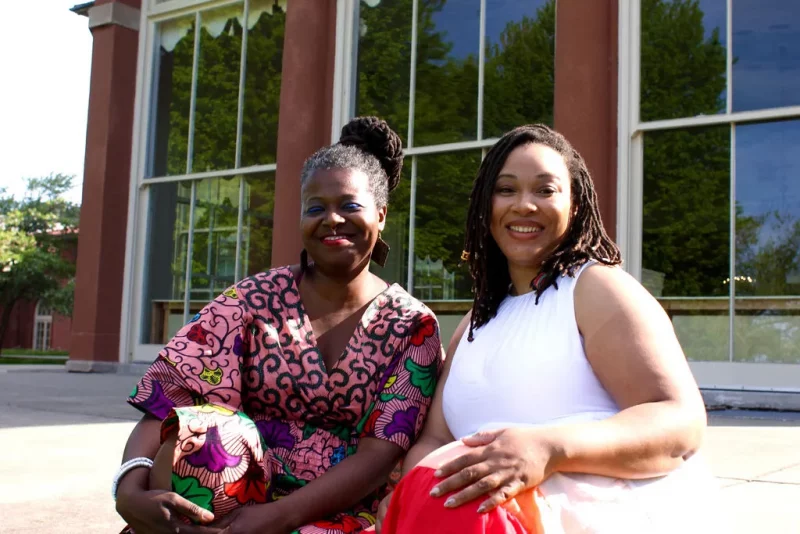
For years, Jeanine Valrie Logan has dreamt of opening a birth center in Chicago, where she supports families as a certified nurse midwife.
After pushing for legislation to expand Illinois’ birth centers in 2021, she teamed up with local doula Shaquan Dupart to open a facility that can serve a section of the city that is, in some U.S. Census tracts, as much as 99% Black — but which only has four hospitals with maternity wards.
“When people come in the space, [I want] people to realize that they have the knowledge and the technology that they need to achieve their wildest dreams for themselves, for their families, for their children, for their community,” Logan says. “I just want people to come in and kick off their shoes and make some tea and just really feel like they can be at home.”
The midwife-doula duo are bringing Chicago South Side Birth Center (CSSBC) to the city at a time when other medical institutions are bowing out.
“Specifically on the South Side of Chicago, since 2019, four of our community hospitals have closed,” Logan says. “There are many who still don’t accept all insurances.”
While those challenges persist, Black women are about three times more likely than white women to die from pregnancy-related complications in Illinois.
And in Chicago, one of the most segregated cities in the nation, at 14.8%, the rates for preterm birth are highest among Black infants, compared to 8.2% for white infants.
A 2019 study revealed that Black neighborhoods in the Windy City that were impacted by redlining had higher preterm birth rates than Black neighborhoods not impacted by the racist mortgage practices.
Logan and Dupart seek to interrupt these trends by establishing a birth center that’s community-centered.
Check out the full article for details.
Infant mortality is higher for Black than white mothers, whether they conceive naturally or via IVF. Sadly, Black mothers suffer even if they survive maternity.
Our breaking news section covers Black health topics.
Comments Are Welcome
Note: We moderate submissions in order to create a space for meaningful dialogue, a space where museum visitors – adults and youth –– can exchange informed, thoughtful, and relevant comments that add value to our exhibits.
Racial slurs, personal attacks, obscenity, profanity, and SHOUTING do not meet the above standard. Such comments are posted in the exhibit Hateful Speech. Commercial promotions, impersonations, and incoherent comments likewise fail to meet our goals, so will not be posted. Submissions longer than 120 words will be shortened.
See our full Comments Policy here.