The Racial Gap in U.S. Vaccinations Is Shrinking, but Work Remains
Share
Explore Our Galleries









Breaking News!
Today's news and culture by Black and other reporters in the Black and mainstream media.
Ways to Support ABHM?
By Amy Schoenfeld Walker, Albert Sun, Yuriria Avila, Laney Pope and
Black and Hispanic people across the United States have receiveda disproportionately smaller share of vaccinations to date, according to a New York Times analysis of state-reported race and ethnicity information. And vaccine disparities have grown in some of the most socially vulnerable parts of the nation, leaving many low-income communities of color with vaccination rates well below the national average.
However, state and federal data reveal that the country has made some progress toward vaccine parity.
Since March, nearly every state reporting the race and ethnicity of vaccinated people has seen the Black share of the total vaccinated population increase, inching closer to the Black share of the general population….
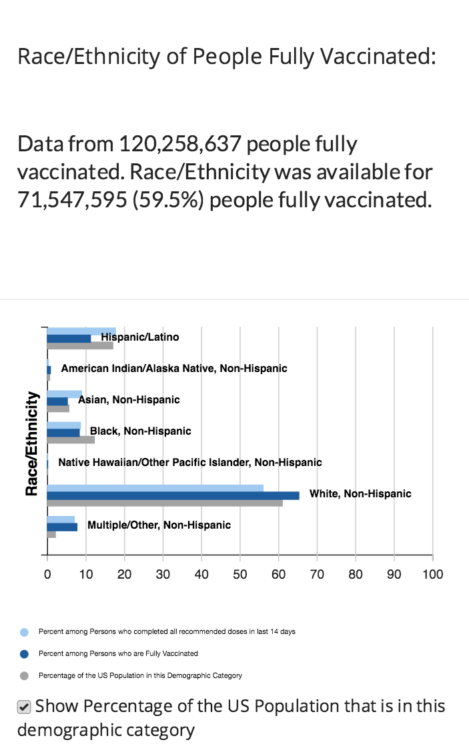
…Recent polling also indicates that Hispanic people still have significant interest in getting a vaccine, and that lower vaccination rates are due to misinformation about cost and access, as well as concerns about employment and immigration issues. A new Kaiser Family Foundation survey found that one in three unvaccinated Hispanic adults say they want to get a vaccine as soon as possible, a larger share than other racial and ethnic groups.
“We have a real opportunity to keep pushing forward,” said James Rudyk, executive director of the Northwest Side Housing Center in Chicago, which runs vaccine clinics in Belmont Cragin, a largely Hispanic neighborhood….
Read the full article here.
Learn about how to achieve racial repair.
More Breaking News here.
Comments Are Welcome
Note: We moderate submissions in order to create a space for meaningful dialogue, a space where museum visitors – adults and youth –– can exchange informed, thoughtful, and relevant comments that add value to our exhibits.
Racial slurs, personal attacks, obscenity, profanity, and SHOUTING do not meet the above standard. Such comments are posted in the exhibit Hateful Speech. Commercial promotions, impersonations, and incoherent comments likewise fail to meet our goals, so will not be posted. Submissions longer than 120 words will be shortened.
See our full Comments Policy here.