The Origins of Prison Slavery
Share
Explore Our Galleries









Breaking News!
Today's news and culture by Black and other reporters in the Black and mainstream media.
Ways to Support ABHM?
By
How Southern whites found replacements for their emancipated slaves in the prison system.
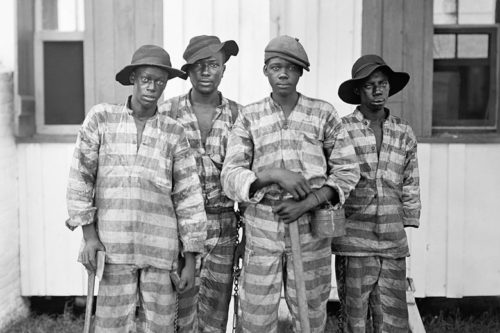
A Southern chain gang from the 1900s. (Detroit Publishing Company/United States Library of Congress)
In August, an organization called the Incarcerated Workers Organizing Committee announced that prisoners in at least 17 states had pledged to stage a strike to protest prison conditions. It is unclear how many inmates actually took part in the 19-day strike, but organizers said “thousands“ refused to work, staged sit-ins, and turned away meals to demand “an immediate end to prison slavery.” Nationwide, inmates’ labor is essential to running prisons. They cook, clean, do laundry, cut hair, and fulfill numerous administrative tasks for cents on the dollar, if anything, in hourly pay. Prisoners have been used to package Starbucks coffee and make lingerie. In California, inmates volunteer to fight the state’s wildfires for just $1 an hour plus $2 per day.
The link between prison labor and slavery is not merely rhetorical. At the end of the Civil War, the 13th amendment abolished slavery “except as a punishment for a crime.” This opened the door for more than a century of forced labor that was in many ways identical to, and in some ways worse than, slavery. The following is an excerpt from my new book, American Prison: A Reporter’s Undercover Journey Into the Business of Punishment. The book details my time working undercover as a prison guard in a for-profit prison in Louisiana. It also traces the ways in which our prison system evolved out of the attempt of Southern businessmen to keep slavery alive.
A few years after the Civil War ended, Samuel Lawrence James bought a plantation on a sleepy bend of the Mississippi River in Louisiana’s West Feliciana Parish. It was known as Angola, named for the country of origin of many of the people who were once enslaved there. Before the war, it produced 3,100 bales of cotton a year, an amount few Southern plantations could rival. For most planters, those days seemed to be over. Without slaves, it was impossible to reach those levels of production…
Check out the books, Slavery by Another Name and One Dies, Get Another.
Read more Breaking News here
View more galleries from the ABHM here
Comments Are Welcome
Note: We moderate submissions in order to create a space for meaningful dialogue, a space where museum visitors – adults and youth –– can exchange informed, thoughtful, and relevant comments that add value to our exhibits.
Racial slurs, personal attacks, obscenity, profanity, and SHOUTING do not meet the above standard. Such comments are posted in the exhibit Hateful Speech. Commercial promotions, impersonations, and incoherent comments likewise fail to meet our goals, so will not be posted. Submissions longer than 120 words will be shortened.
See our full Comments Policy here.