Study Finds Racial Bias In Police Traffic Stops And Searches
Share
Explore Our Galleries









Breaking News!
Today's news and culture by Black and other reporters in the Black and mainstream media.
Ways to Support ABHM?
Black drivers were about 20 percent more likely than whites to be pulled over, according to an analysis of nearly 100 million cases.
A large-scale study of traffic stops across the U.S. found significant black-versus-white disparities in how often drivers were stopped and searched by police, as well as evidence of racial bias behind those disparities.
Black drivers were about 20 percent more likely to be stopped by police than were white drivers, according to a study published last week by Stanford University’s Open Policing Project.
Researchers looked at data for nearly 100 million traffic stops from 2011 to 2017, carried out by 21 state patrol agencies, including in California, New York and Texas, as well as 29 municipal police departments, including Denver; Tampa, Florida; and Fort Wayne, Indiana.
The researchers also sought to dig beyond the disparities themselves to assess whether there was evidence of racial discrimination motivating the different rates of stops and searches.
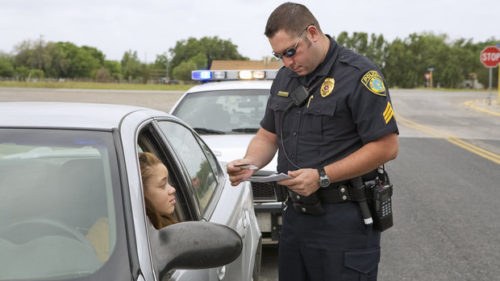 For stops, they conducted a “veil of darkness” test, meant to assess if the disparity was less after nightfall, when it would be harder to detect a driver’s race. They, in fact, did find a drop in the proportion of black drivers stopped after dark, suggesting racial bias was a factor.
In terms of searches, the study found that, although police were more likely to find drugs, guns or other contraband in stops of white drivers, black drivers were still searched about 1.5 to 2 times as often.
Comments Are Welcome
Note: We moderate submissions in order to create a space for meaningful dialogue, a space where museum visitors – adults and youth –– can exchange informed, thoughtful, and relevant comments that add value to our exhibits.
Racial slurs, personal attacks, obscenity, profanity, and SHOUTING do not meet the above standard. Such comments are posted in the exhibit Hateful Speech. Commercial promotions, impersonations, and incoherent comments likewise fail to meet our goals, so will not be posted. Submissions longer than 120 words will be shortened.
See our full Comments Policy here.