Special News Series: Rising Up For Justice! – Kenosha protesters sue Facebook and armed men they say helped incite violence
Share
Explore Our Galleries









Breaking News!
Today's news and culture by Black and other reporters in the Black and mainstream media.
Ways to Support ABHM?
Introduction To This Series:
This post is one installment in an ongoing news series: a “living history” of the current national and international uprising for justice.
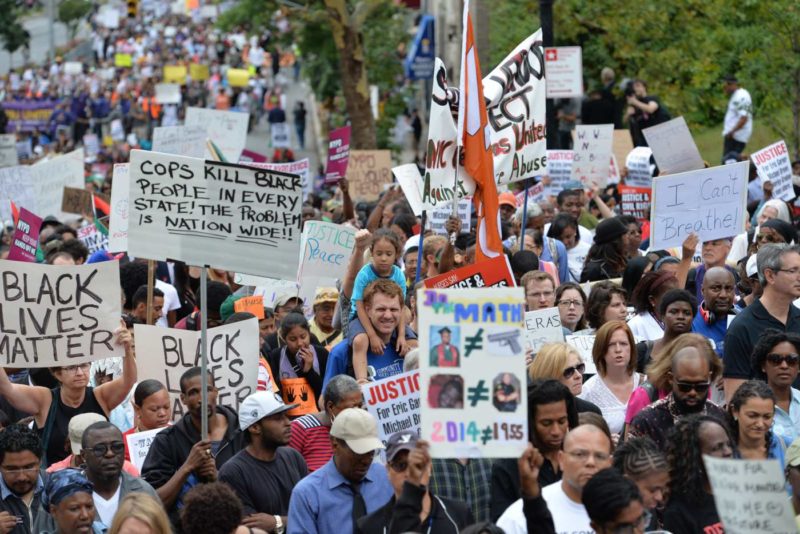
Today’s movement descends directly from the many earlier civil rights struggles against repeated injustices and race-based violence, including the killing of unarmed Black people. The posts in this series serve as a timeline of the uprising that began on May 26, 2020, the day after a Minneapolis police officer killed an unarmed Black man, George Floyd, by kneeling on his neck. The viral video of Floyd’s torturous suffocation brought unprecedented national awareness to the ongoing demand to truly make Black Lives Matter in this country.
The posts in this series focus on stories of the particular killings that have spurred the current uprising and on the protests taking place around the USA and across the globe. Sadly, thousands of people have lost their lives to systemic racial, gender, sexuality, judicial, and economic injustice. The few whose names are listed here represent the countless others lost before and since. Likewise, we can report but a few of the countless demonstrations for justice now taking place in our major cities, small towns, and suburbs.
To view the entire series of Rising Up for Justice! posts, insert “rising up” in the search bar above.
Kenosha protesters sue Facebook and armed men they say helped incite violence through social media
By Bruce Vielmetti, Milwaukee Journal Sentinel
September 23, 2020

Four people who were protesting in Kenosha the night of Aug. 25, including the girlfriend of a man who was killed by Kyle Rittenhouse during the unrest, have sued Facebook and three armed men they say fomented violence through social media.
The plaintiffs include Hannah Gittings, 23, who watched Anthony Huber, 26, die after he was shot by Rittenhouse, 17. Authorities say he was striking the teen with a skateboard and trying to disarm him shortly after Rittenhouse had shot and killed another man, Joseph Rosenbaum, 36.
Other plaintiffs include two Kenosha men and a Milwaukee woman who say they were subjected to threats, intimidation and violence by the defendants.
Besides Facebook, the defendants in the federal lawsuit include Rittenhouse, the Illinois resident facing homicide charges; Ryan Balch, a West Bend man who later wrote and spoke about being with Rittenhouse that night; and Kevin Mathewson, a former Kenosha alderman who formed the Kenosha Guard and used Facebook to call for armed followers to come to the city.
Mathewson and Balch have not responded to earlier requests for interviews. According to the Southern Poverty Law Center, Balch has been immersed in white supremacy.
The Kenosha Guard and the Boogaloo Bois, an informal group that advocates a race war in America, are also named as defendants.
The lawsuit notes that before the events of that night, Facebook had received 400 reports about the Kenosha Guard page violating the platform’s standards. The page was ultimately taken down, and Facebook CEO Mark Zuckerberg said an “operational mistake” left some messages up too long.
The suit says that even though Facebook labeled Rittenhouse’s actions a “mass murder,” it said there were “no direct links between his accounts and the Kenosha Guard page.”
The lawsuit goes on to say: “However, common sense — and, likely, further discovery — counsels that Rittenhouse would not have known about or traveled to Kenosha but for the Call to Arms having been widely publicized.”
The lawsuit seeks a judgment that Facebook was negligent, and that the other defendants conspired to and violated the plaintiffs’ civil rights, and intentionally inflicted emotional distress. It seeks an injunction against any future militia-style actions during protests and unspecified damages.
Read the full article here.
More Breaking News here.
Comments Are Welcome
Note: We moderate submissions in order to create a space for meaningful dialogue, a space where museum visitors – adults and youth –– can exchange informed, thoughtful, and relevant comments that add value to our exhibits.
Racial slurs, personal attacks, obscenity, profanity, and SHOUTING do not meet the above standard. Such comments are posted in the exhibit Hateful Speech. Commercial promotions, impersonations, and incoherent comments likewise fail to meet our goals, so will not be posted. Submissions longer than 120 words will be shortened.
See our full Comments Policy here.