Special News Series: Rising Up For Justice! – Derek Chauvin Verdict Brings a Rare Rebuke of Police Misconduct
Share
Explore Our Galleries









Breaking News!
Today's news and culture by Black and other reporters in the Black and mainstream media.
Ways to Support ABHM?
Introduction To This Series:
This post is one installment in an ongoing news series: a “living history” of the current national and international uprising for justice.
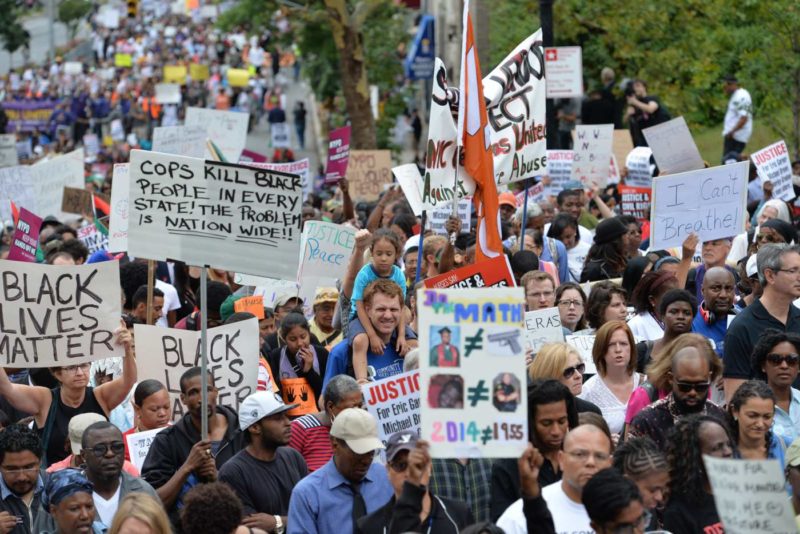
Today’s movement descends directly from the many earlier civil rights struggles against repeated injustices and race-based violence, including the killing of unarmed Black people. The posts in this series serve as a timeline of the uprising that began on May 26, 2020, the day after a Minneapolis police officer killed an unarmed Black man, George Floyd, by kneeling on his neck. The viral video of Floyd’s torturous suffocation brought unprecedented national awareness to the ongoing demand to truly make Black Lives Matter in this country.
The posts in this series focus on stories of the particular killings that have spurred the current uprising and on the protests taking place around the USA and across the globe. Sadly, thousands of people have lost their lives to systemic racial, gender, sexuality, judicial, and economic injustice. The few whose names are listed here represent the countless others lost before and since. Likewise, we can report but a few of the countless demonstrations for justice now taking place in our major cities, small towns, and suburbs.
To view the entire series of Rising Up for Justice! posts, insert “rising up” in the search bar above.
Derek Chauvin Verdict Brings a Rare Rebuke of Police Misconduct
A jury deliberated for just over 10 hours before pronouncing Mr. Chauvin guilty on all three charges: second-degree murder, third-degree murder and second-degree manslaughter.
By John Eligon, Tim Arango, Shaila Dewan and Nicholas Bogel-Burroughs; New York Times
April 20, 2021
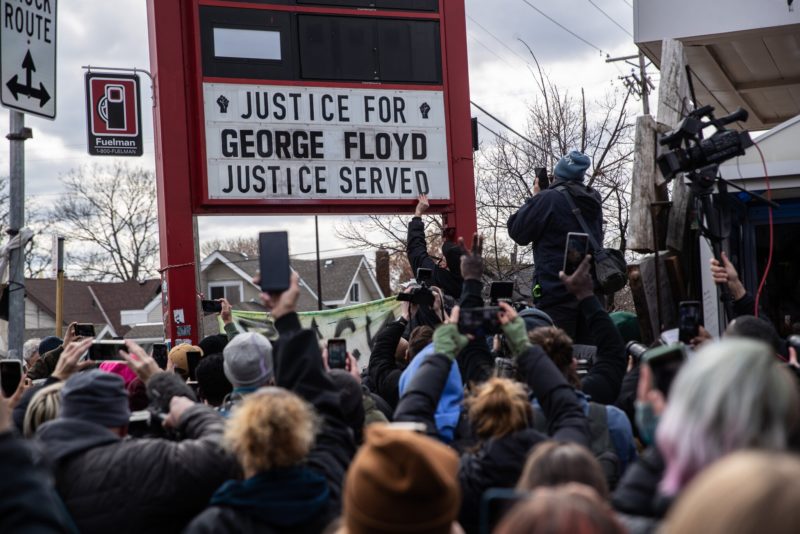
MINNEAPOLIS — A former police officer who pressed his knee into George Floyd’s neck until well past Mr. Floyd’s final breath was found guilty of murder on Tuesday in a case that shook the nation’s conscience and drew millions into the streets for the largest racial justice protests in generations.
The verdict, which could send the former officer, Derek Chauvin, to prison for decades, was a rare rebuke of police violence, following case after case of officers going without charges or convictions after killing Black men, women and children.
At the center of it all was an excruciating video, taken by a teenage girl, that showed Mr. Chauvin, who is white, kneeling on the neck of Mr. Floyd, who was Black, for nine minutes and 29 seconds as Mr. Floyd pleaded for his life and bystanders tried to intervene. Mr. Floyd repeated “I can’t breathe” more than 20 times during the encounter.
The video, played on a horrifying loop for the past year, triggered more than calls for changes in policing. It stirred Americans of all races, in small towns and large cities, to gather for mass protests, chanting “Black lives matter” and challenging the country to finally have a true reckoning over race. Their demands reverberated within the walls of institutions that had long resisted change, from corporate America to Congress.
This week, over the course of two days, a racially diverse jury of seven women and five men deliberated for about 10 hours before pronouncing Mr. Chauvin guilty on all three charges: second-degree murder, third-degree murder and second-degree manslaughter…
After the verdict, Philonise Floyd, one of Mr. Floyd’s younger brothers, spoke at the Hilton hotel in downtown Minneapolis. “We are able to breathe again,” he said, holding back tears.
He drew a line from his brother back to Emmett Till, a Black child who was lynched in Mississippi in 1955. “We ought to always understand that we have to march,” he said. “We will have to do this for life. We have to protest because it seems like this is a never-ending cycle.”…
The verdict was hailed across the country by civil rights leaders and honking motorists. It gave a tense nation a moment to exhale, even as recent police killings in a Minneapolis suburb, Chicago and, on Tuesday afternoon, Columbus, Ohio, sent Americans back into the streets, holding signs that asked, “How many more?”…
The judge will sentence Mr. Chauvin, 45, in eight weeks…
Read the full article here.
More Breaking News here.
Explore the ABHM galleries here.
Comments Are Welcome
Note: We moderate submissions in order to create a space for meaningful dialogue, a space where museum visitors – adults and youth –– can exchange informed, thoughtful, and relevant comments that add value to our exhibits.
Racial slurs, personal attacks, obscenity, profanity, and SHOUTING do not meet the above standard. Such comments are posted in the exhibit Hateful Speech. Commercial promotions, impersonations, and incoherent comments likewise fail to meet our goals, so will not be posted. Submissions longer than 120 words will be shortened.
See our full Comments Policy here.