Recreational Therapist Helps Prisoners Get Their Heads Right
Share
Explore Our Galleries









Breaking News!
Today's news and culture by Black and other reporters in the Black and mainstream media.
Ways to Support ABHM?
By Genoa Barrow, The Observer
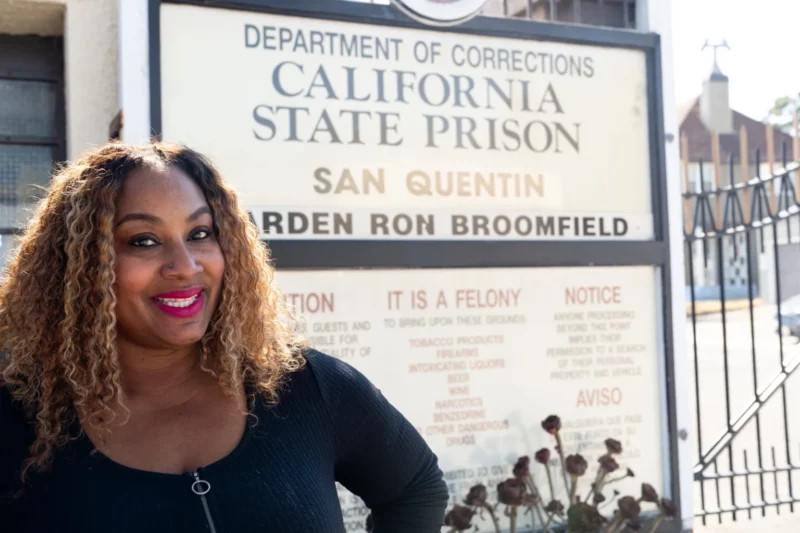
Although she’s never been inside it, a local correctional worker has a unique tie to San Quentin State Prison. She was conceived there.
Naimah McDaniels entered the world as the child of an incarcerated Black man. Today, she works as a recreational therapist at Ion’s Mule Creek State Prison, helping men such as her father deal with mental health issues and other traumas related to who and where they are.
The role stems from a class action lawsuit that played out in a Sacramento courtroom in 1995. An inmate, Ralph Coleman, sued the Department of Corrections on behalf of all prisoners for the lack of adequate mental health resources.
“They went in and investigated,” McDaniels says. “They saw that there was a lack of proper treatment [and] a lack of resources for them. They were putting everybody in the same category, so if they had behaviors, or they would act out, they weren’t getting that help that they really needed.”
Often, the answer – or punishment – for mental health crises would be, and still is, to place a person in solitary confinement for extended periods. Staffing has long been an issue locally and statewide.
“Back in the day there would be maybe one psychologist among 2,000 inmates,” McDaniels says.
That wasn’t sufficient to deal with the multitude of mental health issues the inmates experience, hence the hiring of more staffers like her.
Health outcomes also extend to probation.
More breaking news here.
Comments Are Welcome
Note: We moderate submissions in order to create a space for meaningful dialogue, a space where museum visitors – adults and youth –– can exchange informed, thoughtful, and relevant comments that add value to our exhibits.
Racial slurs, personal attacks, obscenity, profanity, and SHOUTING do not meet the above standard. Such comments are posted in the exhibit Hateful Speech. Commercial promotions, impersonations, and incoherent comments likewise fail to meet our goals, so will not be posted. Submissions longer than 120 words will be shortened.
See our full Comments Policy here.