Racial Disparities in Environmental Concerns Highlighted in New Gallup Survey
Share
Explore Our Galleries









Breaking News!
Today's news and culture by Black and other reporters in the Black and mainstream media.
Ways to Support ABHM?
By Stacy M Brown, The Washington Informer
Black Americans are more likely than other racial or ethnic groups to express concerns about environmental threats and experience acute ecological crises, with many facing challenges in relocating to avoid environmental threats.
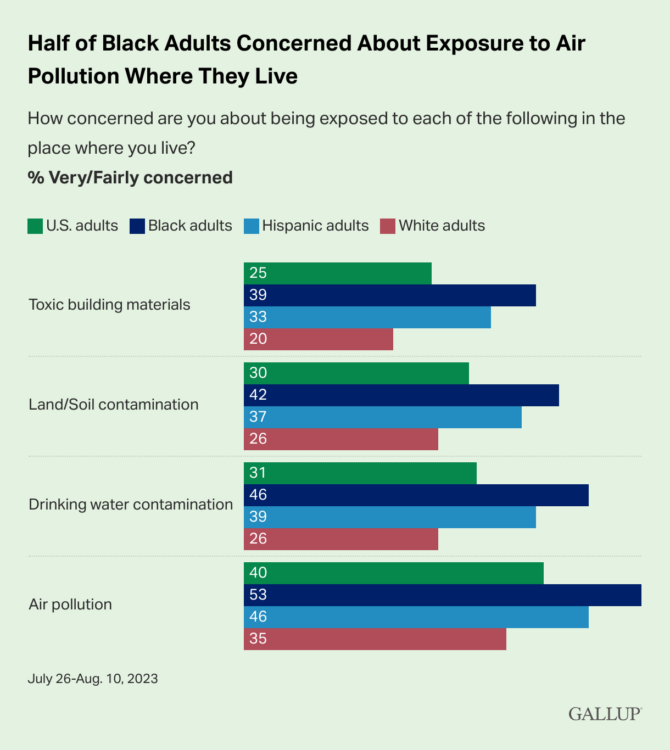
A new Gallup survey has revealed that Black Americans are more likely to express concerns and experience an environmental crisis where they face challenges in relocating.
Gallup found that Black Americans are notably more likely than other racial or ethnic groups to express concerns about environmental threats and to experience acute ecological crises.
According to the survey, 53% of Black adults are “very” or “fairly concerned” about exposure to air pollution in their communities. The concern is significantly higher than that among Hispanic adults, at 46%, and white adults, at 35%. Further, concerns about drinking water contamination among Black Americans are 15 percentage points higher than the national average and 20 points higher than among white Americans.
Black adults also reported elevated levels of concern about exposure to land or soil contamination (42%) and exposure to toxic building materials (39%) compared to other racial and ethnic groups.
Keep reading for the rest of the findings.
The concern is warranted, considering Black Americans are more likely to die from pollution.
Comments Are Welcome
Note: We moderate submissions in order to create a space for meaningful dialogue, a space where museum visitors – adults and youth –– can exchange informed, thoughtful, and relevant comments that add value to our exhibits.
Racial slurs, personal attacks, obscenity, profanity, and SHOUTING do not meet the above standard. Such comments are posted in the exhibit Hateful Speech. Commercial promotions, impersonations, and incoherent comments likewise fail to meet our goals, so will not be posted. Submissions longer than 120 words will be shortened.
See our full Comments Policy here.