Princeton to Name Residential College After Black Alumna
Share
Explore Our Galleries









Breaking News!
Today's news and culture by Black and other reporters in the Black and mainstream media.
Ways to Support ABHM?
It will be named after Mellody Hobson and built where a college once bore Woodrow Wilson’s name. Princeton in June said the former president was a racist who segregated the Civil Service.Italics.
By , New York Times
On the site of a residential college that for more than 50 years bore the name of Woodrow Wilson, the president who oversaw the segregation of the federal Civil Service, a new Princeton residential college will be built and named after Mellody Hobson, a prominent Black alumna, the university said.
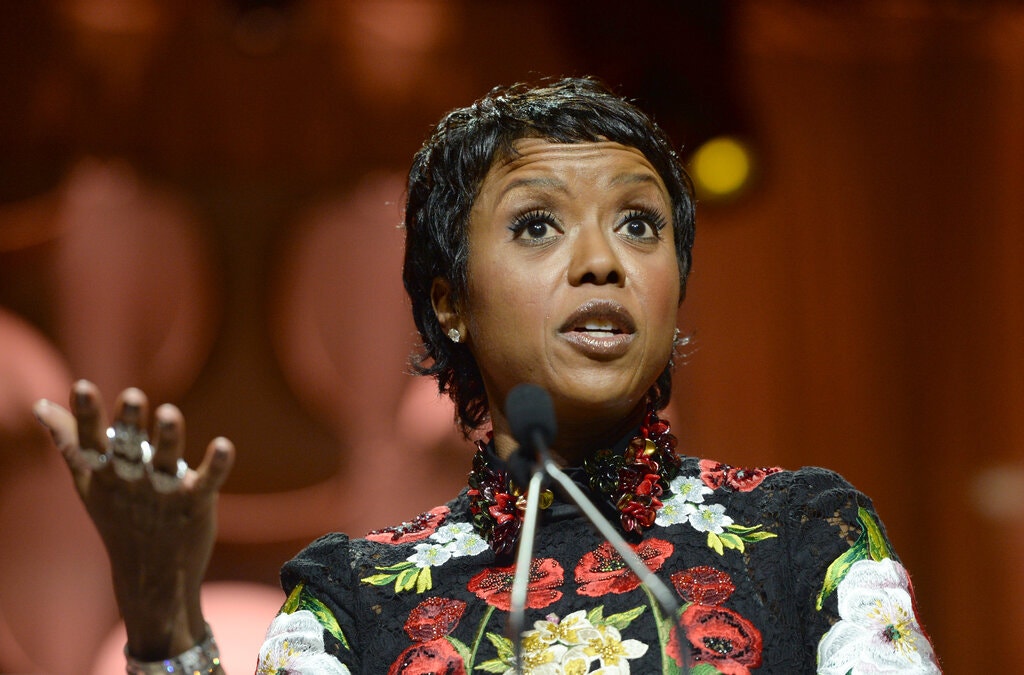
The new residential college, to be named after Mellody Hobson, a Black alumna who is a chief executive of Ariel Investments, will open in 2026, Princeton said.Credit…Michael Kovac/Getty Images
Ms. Hobson, who graduated from Princeton in 1991, serves as a chief executive of Ariel Investments, which describes itself as the first Black-owned investment firm. The residential college, Hobson College, will be the first in the school’s history to honor a Black woman.
The announcement about Hobson College came after the university had faced significant pressure from students and the public to remove Wilson’s name as part of a movement toward racial equality.
It comes at a time when calls for racial justice and a heightened examination of biases — from hot cereal packaging to law enforcement — have been brought to the forefront in part by George Floyd’s killing in Minneapolis in May.

Princeton students staging a sit-in in 2015, demanding that Woodrow Wilson’s name be removed from university buildings. Credit…Julio Cortez/Associated Press
The university’s board of trustees found that Wilson’s “racist thinking and policies make him an inappropriate namesake for a school or college whose scholars, students and alumni must stand firmly against racism in all its forms,” Princeton’s president, Christopher L. Eisgruber, said at the time.
“Wilson’s racism was significant and consequential even by the standards of his own time,” Mr. Eisgruber said. Wilson was the university’s president from 1902 to 1910 before becoming the U.S. president in 1913….
Ms. Hobson said…, “My hope is that my name will remind future generations of students — especially those who are Black and brown and the ‘firsts’ in their families — that they too belong.”
Learn about more Black women and girls who are “firsts” here.
More Breaking News here
Comments Are Welcome
Note: We moderate submissions in order to create a space for meaningful dialogue, a space where museum visitors – adults and youth –– can exchange informed, thoughtful, and relevant comments that add value to our exhibits.
Racial slurs, personal attacks, obscenity, profanity, and SHOUTING do not meet the above standard. Such comments are posted in the exhibit Hateful Speech. Commercial promotions, impersonations, and incoherent comments likewise fail to meet our goals, so will not be posted. Submissions longer than 120 words will be shortened.
See our full Comments Policy here.