‘Our City Is Always Hurting’: Black New Orleans Residents Grapple With Inequity
Share
Explore Our Galleries









Breaking News!
Today's news and culture by Black and other reporters in the Black and mainstream media.
Ways to Support ABHM?
By Adam Mahoney, Capital B
After this week’s attack in the French Quarter, they’re questioning why it takes “terror” to draw attention to the systemic violence the city historically faces.
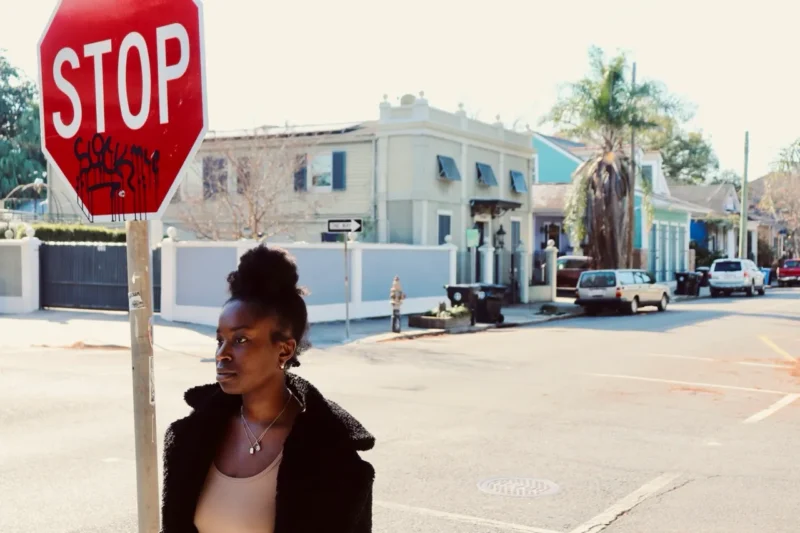
NEW ORLEANS – Mark Whitaker sells chicken and hot links in New Orleans’ historic French Quarter every New Year’s Eve as fireworks paint the sky along the Mississippi River. He pulls his cooler and barbecue pit through the crowded streets to maximize his profits as the city attracts up to 150,000 tourists on New Year’s Eve and Day.
Sometimes, he sells into the wee hours of 3 or 4 a.m. on New Year’s, but this year shortly after 1 a.m he decided to close up early after a long night of selling. The decision might just have saved his life.
On Wednesday morning, he woke up to the news that a driver rammed through a crowd of revelers in a rented pickup truck around 3 a.m before opening fire, killing at least 14 people and injuring around 30 others in what is being described as one of the nation’s worst terror attacks. Beneath the outpouring of official support lies a deeper unease: it’s taken a tragedy of this scale to ignite action in a city that has long grappled with racism, poverty, and gun violence. Some Black residents also told Capital B that they’re tired of being praised for their “resilience” when they’re never offered the proactive resources before a tragedy ever happens.
In the wake of the devastating attack on one of America’s largest majority-Black cities, a familiar sense of neglect hangs heavy over residents like Whitaker. As federal, state, and local authorities have mobilized extensive resources, including bringing in hundreds of government officials and increasing the police presence, Black residents worry about the consequences in a city with a long history of police brutality backdropped against the nation’s highest murder rate for two consecutive years.
Beneath the outpouring of official support lies a deeper unease: it’s taken a tragedy of this scale to ignite action in a city that has long grappled with racism, poverty, and gun violence. Some Black residents also told Capital B that they’re tired of being praised for their “resilience” when they’re never offered the proactive resources before a tragedy ever happens.
Mahoney explains more.
Learn about Black history.
Comments Are Welcome
Note: We moderate submissions in order to create a space for meaningful dialogue, a space where museum visitors – adults and youth –– can exchange informed, thoughtful, and relevant comments that add value to our exhibits.
Racial slurs, personal attacks, obscenity, profanity, and SHOUTING do not meet the above standard. Such comments are posted in the exhibit Hateful Speech. Commercial promotions, impersonations, and incoherent comments likewise fail to meet our goals, so will not be posted. Submissions longer than 120 words will be shortened.
See our full Comments Policy here.