Opinion Piece: The Hidden Ghosts of America’s Slave Past
Share
Explore Our Galleries









Breaking News!
Today's news and culture by Black and other reporters in the Black and mainstream media.
Ways to Support ABHM?
By Colin Dickey, The New York Times
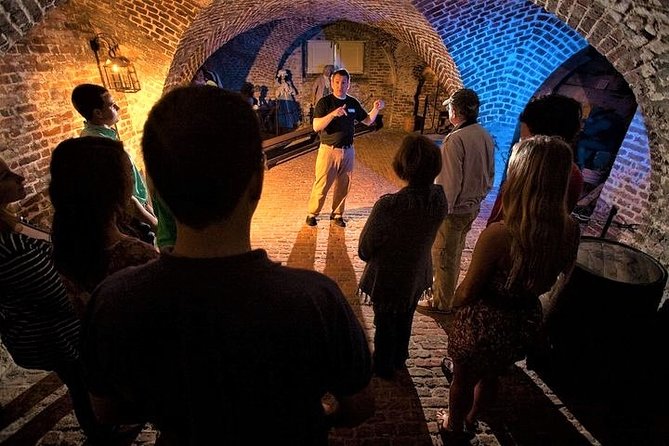
I had come to Charleston, S.C., in search of ghosts. So I signed up for one of the many “haunted Charleston” nighttime walking tours of the “Holy City.” A few hours later, I wandered through the historic French Quarter, flanked by other tourists searching for a thrill. Gas lights flickered over decaying structures, cobblestone alleys, and houses that were at least a century old.
I’ve found that ghost tours can be a creepy, fun way to spend an evening, but also to get to know a city. They tend to focus on the notorious underside of a place: its gruesome criminals and tragic socialites; the terrible scenes of violence that might otherwise be forgotten. Ghost tours like the one I went on in Charleston offer a kind of history that might not be found in a museum; they can also tell you how a city sees itself.
Having taken ghost tours in a number of Southern cities — New Orleans, Richmond, Va., and Savannah, Ga., among them — I’ve come to notice a curious sameness to many of them.
What many of the major tour operators in the South seem to implicitly agree on is that race will go unmentioned. That cool May night was no exception: For all the attention paid to the city’s past, there was no talk of the injustice of slavery, which was especially brutal in Charleston, home to the largest slave auction in America’s history. And yet, there was no mention of it — and certainly no mention of the attempted slave revolt that changed the city forever.
The nighttime walking tour had promised death and depravity in the Holy City, and, in its own way, it delivered. As we walked through the downtown, the tour guide told us stories of the Barbadian pirate Stede Bonnet, who supposedly haunts the Old Exchange Building and Provost Dungeon; of Harriet Mackie, the tragic 17-year-old who, perhaps poisoned by her sewing woman, died shortly before her marriage; and of Sue Howard, the mother in eternal mourning whose ghost haunts the cemetery of St. Philip’s Church. (The church discourages these stories; a plaque on the grounds reads: “The only ghost at St. Philip’s is the Holy Ghost.”)
Leaving race out of any history is a striking blind spot — even in a ghost tour. Ghost stories, after all, are one of the ways we talk about historic injustices and crimes unavenged. Focusing on pirates and poisoned Southern belles, while ignoring the cruelty and horror of chattel slavery, is one of many ways the past gets whitewashed. The ghosts of slavery are still here, though sometimes they don’t lurk in creepy old buildings. Sometimes they are right in front of your face.
Read more about the ghost tours in the original article.
Learn about the way Milwaukee reckons with its own history in this virtual exhibit.
Find more Breaking News here.
Comments Are Welcome
Note: We moderate submissions in order to create a space for meaningful dialogue, a space where museum visitors – adults and youth –– can exchange informed, thoughtful, and relevant comments that add value to our exhibits.
Racial slurs, personal attacks, obscenity, profanity, and SHOUTING do not meet the above standard. Such comments are posted in the exhibit Hateful Speech. Commercial promotions, impersonations, and incoherent comments likewise fail to meet our goals, so will not be posted. Submissions longer than 120 words will be shortened.
See our full Comments Policy here.