On the ground with New York City’s Black motorcycle clubs
Share
Explore Our Galleries









Breaking News!
Today's news and culture by Black and other reporters in the Black and mainstream media.
Ways to Support ABHM?
By Julius Constantine Motal, NBC News
“I would call the Black motorcycle community a very loud whisper,” said one biker featured in the new book of photography “Ezy Ryders,” by Cate Dingley.
They can be seen tearing down the FDR Drive in New York City, wind whipping past as they fill all three lanes with nary a car in sight. They are members of one of New York’s all-Black motorcycle clubs that rule the road throughout the five boroughs.
Peering over their shoulders is photographer Cate Dingley, framing the shot to both capture the scene in front of her and herself in the side mirror.
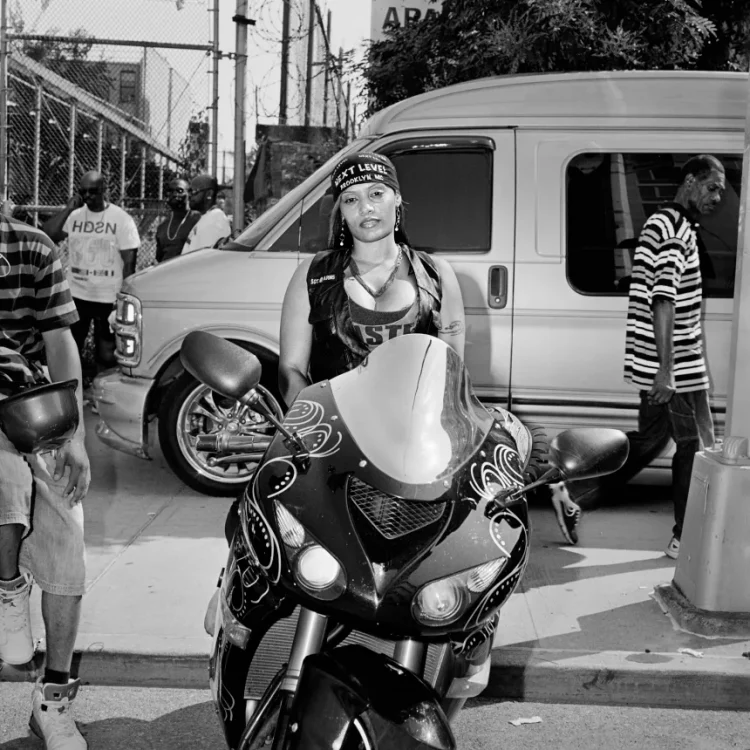
That self-portrait is included in “Ezy Ryders,” a new photography book by Dingley that brings to light a thriving and diverse community with a shared love of motorcycles.
Photographed from 2014 to 2019, the book features black and white photographs from rides, parties, bike blessings, clubs and memorials, interspersed with excerpts from conversations she had with the bikers.
The project grew out of a chance connection through a friend in 2014. Dingley soon found herself making portraits of bikers at a biker club in Bushwick, and she was invited to a barbecue later that day, with hundreds of bikers.
Find more of Dingley’s photography in the original story.
Motorcycle clubs are one of several things, including opera, camping, and farming, that are not often associated with the Black community.
Check out other recent stories.
Comments Are Welcome
Note: We moderate submissions in order to create a space for meaningful dialogue, a space where museum visitors – adults and youth –– can exchange informed, thoughtful, and relevant comments that add value to our exhibits.
Racial slurs, personal attacks, obscenity, profanity, and SHOUTING do not meet the above standard. Such comments are posted in the exhibit Hateful Speech. Commercial promotions, impersonations, and incoherent comments likewise fail to meet our goals, so will not be posted. Submissions longer than 120 words will be shortened.
See our full Comments Policy here.