Nikole Hannah-Jones makes a case for reparations with ‘The 1619 Project’ series
Share
Explore Our Galleries









Breaking News!
Today's news and culture by Black and other reporters in the Black and mainstream media.
Ways to Support ABHM?
By Candice Williams, NBC News
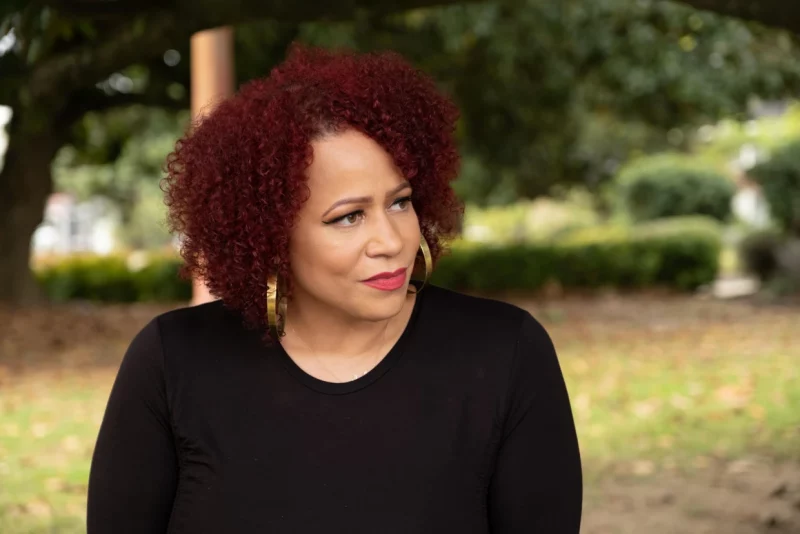
A little more than three years after “The 1619 Project” published in The New York Times Magazine, presenting a provocative examination of the American slave trade and its legacy, Nikole Hannah-Jones will debut her Pulitzer Prize-winning work on Hulu Thursday with a specific purpose in mind: to strengthen the case for reparations.
“We’re going to have to fight for equality, whether we get reparations or not,” she said. “But I would rather we’re fighting for equality having gotten some semblance of financial justice for the financial and other crimes that Black people have experienced.”
The Hulu series, produced under the Onyx Collective brand, carefully builds a case for reparations by providing a historic and contemporary analysis of the impact of slavery. Hannah-Jones’ argument for reparations, though, is not new.
[…]
In the Hulu series and in many of his published works, including a 2021 article in The Economist co-written with A. Kirsten Mullen, Darity estimated that it would cost the federal government between $12 trillion to $14 trillion to pay financial restitution to Black American descendants of those enslaved. He notes that Black people were excluded from full citizenship in the U.S. at the nation’s founding and it would take an average of $350,000 per person to help close the wealth gap for the 40 million descendants alive today.
“The community is owed a debt from the federal government that has never been met over the course of the 157 years since the end of the Civil War,” he said, citing several “negative policies” like the denial of 40-acre land grants for Black Americans by the government, which returned 400,000 acres of land back to Confederate owners. Darity also referenced massacres of Black people across the country by white terrorists, and the appropriation and seizure of Black-owned property in the aftermath of the Civil War. Those practices, he said, carry over to discriminatory housing practices against Black Americans, a widening racial wealth gap and a pattern of policies that have stunted the financial growth of Black Americans.
Reparation could be just one factor in racial repair.
Keep up to date with more Black news.
Comments Are Welcome
Note: We moderate submissions in order to create a space for meaningful dialogue, a space where museum visitors – adults and youth –– can exchange informed, thoughtful, and relevant comments that add value to our exhibits.
Racial slurs, personal attacks, obscenity, profanity, and SHOUTING do not meet the above standard. Such comments are posted in the exhibit Hateful Speech. Commercial promotions, impersonations, and incoherent comments likewise fail to meet our goals, so will not be posted. Submissions longer than 120 words will be shortened.
See our full Comments Policy here.