New Program for Underserved Communities Is Boosting Students’ Confidence With Math
Share
Explore Our Galleries









Breaking News!
Today's news and culture by Black and other reporters in the Black and mainstream media.
Ways to Support ABHM?
By Aziah Sid, Word in Black
Howard University, Khan Academy, and the National Education Equity Lab have teamed up to get high schoolers ready for college-level algebra.
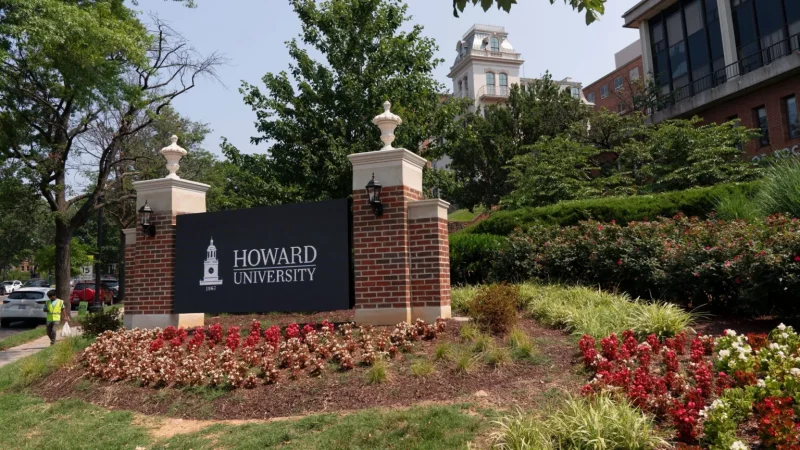
Submitting college applications, meeting financial aid deadlines, and waiting for acceptance letters — for many seniors in high school, the college admissions process can be as nerve-wracking as physically walking through campus on the first day.
Ideally, from the start of senior year, students, families, and guidance counselors work as one to make the transition to college as seamless as possible. Now Howard University, Khan Academy, and the National Education Equity Lab are teaming up to make that process even easier for students at 11 high schools throughout the United States. They’re joining forces by offering a credit-bearing college algebra course for high school students.
Howard University’s partnership with Khan Academy delivers a three-credit math course to historically underserved communities through the National Education Equity Lab. Since its pilot in the spring 2022 semester, the program has expanded from 79 students to 200 students.
[…]
Studies show that only 57% of Black students have access to the full range of math and science courses necessary for college readiness, compared to 81% of Asian American students and 71% of white students.
Sal Khan, CEO and founder of Khan Academy, says when you look at what’s really holding college students back, it’s college algebra, prompting the need for them to partner up and bring a course like this forward.
Word in Black has the full story.
This is just one story that highlights the role of HBCUs such as Howard, especially when enrollment still skews white.
More stories like this.
Comments Are Welcome
Note: We moderate submissions in order to create a space for meaningful dialogue, a space where museum visitors – adults and youth –– can exchange informed, thoughtful, and relevant comments that add value to our exhibits.
Racial slurs, personal attacks, obscenity, profanity, and SHOUTING do not meet the above standard. Such comments are posted in the exhibit Hateful Speech. Commercial promotions, impersonations, and incoherent comments likewise fail to meet our goals, so will not be posted. Submissions longer than 120 words will be shortened.
See our full Comments Policy here.