Many African American last names hold weight of Black history
Share
Explore Our Galleries









Breaking News!
Today's news and culture by Black and other reporters in the Black and mainstream media.
Ways to Support ABHM?
By Julica Craven, NBC News
Naming, particularly after emancipation, was a complex matter influenced by newfound agency, and the reasons behind choosing a particular surname varied.
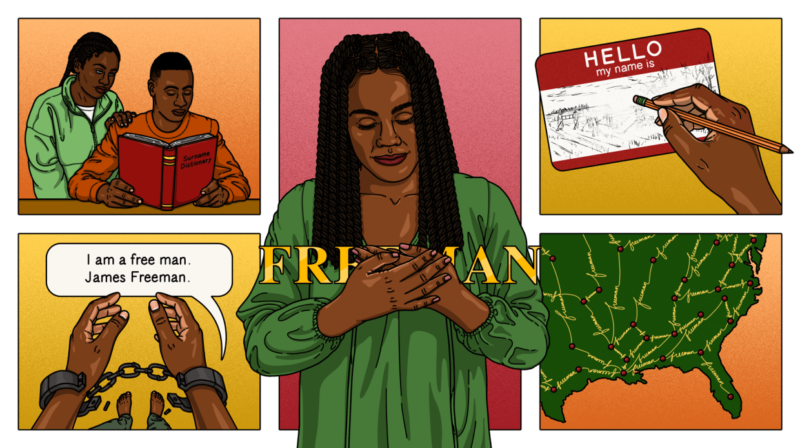
Oluale Kossula: That’s the name author Zora Neale Hurston used when she greeted Cudjo Lewis, the last known survivor of the transatlantic slave trade and the subject of her nonfiction book “Barracoon.” He was delighted at being addressed by the name his mother gave him, according to Hurston’s account of the hours they spent in 1927 piecing together his life on that balmy summer day in Alabama…
Kossula’s renaming illustrates the complicated and fraught origins of many Black American surnames. But his experience is not singular; it was the rule. When Africans were enslaved and brought to America, any identifiers that could have tied them to their homeland or families were broken. Naming, particularly after emancipation, was a complex matter influenced by newfound agency, and the reasons behind choosing a particular surname varied. But the conclusion was always informed by a medley of reverence and power.
“To refer to a person by their given name is to recognize the individual as a person,” wrote Reinette F. Jones, a librarian at the University of Kentucky whose research includes Black families and enslavement in the state. “When African Americans gained their freedom from enslavement, they also gained the freedom to name themselves and their children.”
Enslavement, a centuries-long campaign designed to strip its victims of any essence, both erased names and severed family histories. Before emancipation, those fleeing an enslaver would change their name to remain anonymous. After emancipation, once they could formally establish who they were absent of the enslaver’s influence, many Black folks chose the surname Freeman or Freedman. Others went with Washington, Williams, Brown or Johnson — surnames typical before enslavement that remain ubiquitous today. Some newly freed Black folks who could read chose unique names they saw in newspapers despite lacking a connection to that family. Some named themselves after aspirational Black figures like Frederick Douglass.
Keep reading here.
Discover how names can be a disadvantage and learn about the creativity many modern black parents use when naming their children.
Stay up to date with breaking news about black culture.
Comments Are Welcome
Note: We moderate submissions in order to create a space for meaningful dialogue, a space where museum visitors – adults and youth –– can exchange informed, thoughtful, and relevant comments that add value to our exhibits.
Racial slurs, personal attacks, obscenity, profanity, and SHOUTING do not meet the above standard. Such comments are posted in the exhibit Hateful Speech. Commercial promotions, impersonations, and incoherent comments likewise fail to meet our goals, so will not be posted. Submissions longer than 120 words will be shortened.
See our full Comments Policy here.