‘Look good, run fast’: Black Olympians discuss the importance of their hair
Share
Explore Our Galleries









Breaking News!
Today's news and culture by Black and other reporters in the Black and mainstream media.
Ways to Support ABHM?
By Char Adams, NBC
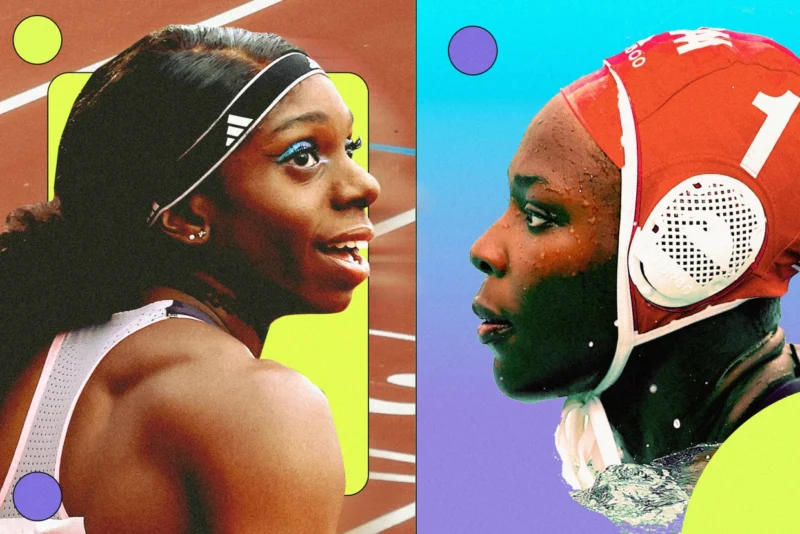
Black American women competing in the 2024 Olympics are in a massive spotlight — and so is their hair.
Kendall Ellis, a 28-year-old sprinter, said she’s planning to highlight her kinky hair texture when she competes in Paris. After she qualified for the Olympics, she said, “it was one of the first things I thought about!” Ellis said she plans to wear a sew-in — hair extensions sewn over her braided hair — that is similar to her natural hair texture.
“I want to do a more natural-looking style, because I think it’s important to have that representation on such a large stage,” Ellis said.
As Ellis, a 400-meter runner, returns to the Games, she won’t be the only Black female athlete thinking about how she’ll wear and manage her hair. Competitors like water polo goalkeeper Ashleigh Johnson and track athletes Brittany Brown and Anna Cockrell represent a swath of Olympians approaching hair care in Paris not with dread and uncertainty, but as an opportunity to showcase their personal styles.
“If you look good, you run fast!” said Brown, who will race the 200-meter sprint.
Black women in athletics have always faced scrutiny over their hair, from Venus Williams’ being penalized over her famous beaded hairstyle and controversy over swim caps for natural hair to the ridicule gymnasts like Gabby Douglas and Simone Biles faced for not having their hair “done.”
Ketra Armstrong, the director of the Center for Race and Ethnicity in Sport at the University of Michigan, said this new generation of athletes is pushing back against hair discrimination.
“For a while, Black women have had to make themselves presentable in a way that wasn’t perceived to be unkept or unprofessional,” Armstrong said. “Black women were judged by their hair, called not professional or not qualified. We’re at a point now where Black women are reclaiming their crown.”
This acceptance is crucial because hair products marketed toward Black women have health risks.
Our breaking news page spotlights more Black Olympians.
Comments Are Welcome
Note: We moderate submissions in order to create a space for meaningful dialogue, a space where museum visitors – adults and youth –– can exchange informed, thoughtful, and relevant comments that add value to our exhibits.
Racial slurs, personal attacks, obscenity, profanity, and SHOUTING do not meet the above standard. Such comments are posted in the exhibit Hateful Speech. Commercial promotions, impersonations, and incoherent comments likewise fail to meet our goals, so will not be posted. Submissions longer than 120 words will be shortened.
See our full Comments Policy here.