Ketanji Brown Jackson confirmed as first Black woman Supreme Court justice in US History
Share
Explore Our Galleries









Breaking News!
Today's news and culture by Black and other reporters in the Black and mainstream media.
Ways to Support ABHM?
By April Ryan, TheGrio
The nation’s first Black woman Vice President, Kamala Harris, notably presided over the historic vote on the Senate floor.
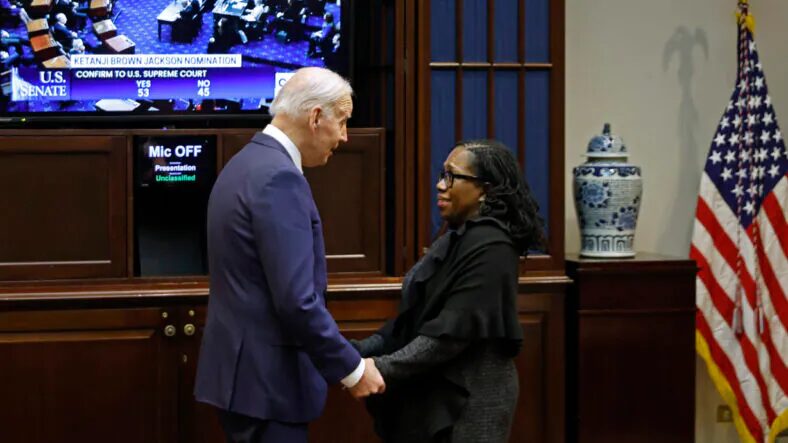
Judge Ketanji Brown Jackson has been officially confirmed to the Supreme Court as the first Black woman justice in U.S. history after the Senate voted 53-47 Thursday afternoon in favor of President Joe Biden’s nomination for the high court.
Vice President Kamala Harris, the nation’s first Black woman to serve in the role, presided over the historic vote — making the moment doubly historic. “This nomination is confirmed,” said Vice President Harris after the votes were tallied on the Senate floor. Shortly after, the chamber burst into applause.
Judge Jackson watched alongside President Biden at the White House inside the Roosevelt Room as the Senate took up the vote for confirmation. Moments after the confirmation, the two embraced with a hug. Jackson was visibly emotional.
Jackson will begin serving her lifetime appointment in October to fill the seat being left vacant by Justice Stephen Breyer, who is retiring at the end of this Supreme Court session.
Read the full story here.
Learn about some of the Civil Right’s movements in America’s past here.
More Breaking News here.
Comments Are Welcome
Note: We moderate submissions in order to create a space for meaningful dialogue, a space where museum visitors – adults and youth –– can exchange informed, thoughtful, and relevant comments that add value to our exhibits.
Racial slurs, personal attacks, obscenity, profanity, and SHOUTING do not meet the above standard. Such comments are posted in the exhibit Hateful Speech. Commercial promotions, impersonations, and incoherent comments likewise fail to meet our goals, so will not be posted. Submissions longer than 120 words will be shortened.
See our full Comments Policy here.