Jan. 6 response would have been ‘vastly different’ if rioters were Black, House sergeant at arms told investigators
Share
Explore Our Galleries









Breaking News!
Today's news and culture by Black and other reporters in the Black and mainstream media.
Ways to Support ABHM?
By Ryan J. Reilly, NBC News
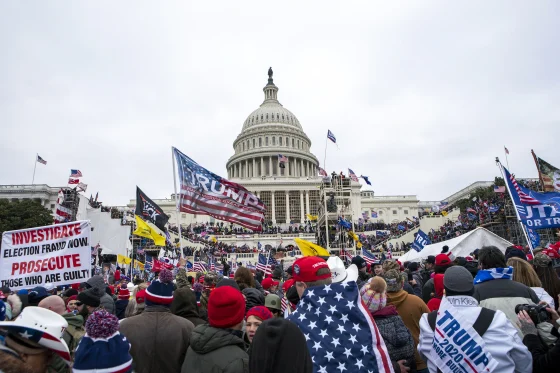
WASHINGTON — The House sergeant at arms, who was head of the D.C. National Guard during the attack on the U.S. Capitol, told the Jan. 6 committee that the law enforcement response would have looked much different had the rioters been Black Americans.
“I’m African American. Child of the sixties. I think it would have been a vastly different response if those were African Americans trying to breach the Capitol,” William J. Walker told congressional investigators, in an interview transcript released Tuesday. “As a career law enforcement officer, part-time soldier, last 5 years full but, but a law enforcement officer my entire career, the law enforcement response would have been different.”
Walker’s testimony echoed the observations of many Americans, including President Joe Biden, who noted the stark difference in the law enforcement response to protests in D.C. following the May 2020 murder of George Floyd and the lax security at the Capitol on Jan. 6.
Walker indicated he thought that more rioters would have died at the hands of law enforcement on Jan. 6 had the makeup of the crowd not been overwhelmingly white.
“You know, as a law enforcement officer, there were — I saw enough to where I would have probably been using deadly force,” Walker said. “I think it would have been more bloodshed if the composition would have been different.”
Walker, a former Drug Enforcement Administration official who became House sergeant at arms in April 2021, also described his personal experiences with discriminatory law enforcement stops, and discussed having “the talk” with his five children and his granddaughter about surviving police encounters as a Black American.
“You’re looking at somebody who would get stopped by the police for driving a high-value government vehicle. No other reason,” Walker said.
Learn more about the insurrection and congressional trial.
Black staffers experienced unique trauma during this insurrection by a white mob.
ABHM’s news section includes relevant political stories.
Comments Are Welcome
Note: We moderate submissions in order to create a space for meaningful dialogue, a space where museum visitors – adults and youth –– can exchange informed, thoughtful, and relevant comments that add value to our exhibits.
Racial slurs, personal attacks, obscenity, profanity, and SHOUTING do not meet the above standard. Such comments are posted in the exhibit Hateful Speech. Commercial promotions, impersonations, and incoherent comments likewise fail to meet our goals, so will not be posted. Submissions longer than 120 words will be shortened.
See our full Comments Policy here.