How the Puyallup Tribe Increased Police Accountability in Washington
Share
Explore Our Galleries









Breaking News!
Today's news and culture by Black and other reporters in the Black and mainstream media.
Ways to Support ABHM?
By Frank Hopper, Yes Magazine
Along with the families of other police shooting victims and the financial support of every federally recognized tribe in Washington state, the Puyallup Tribe helped pass the nation’s first police accountability bill.
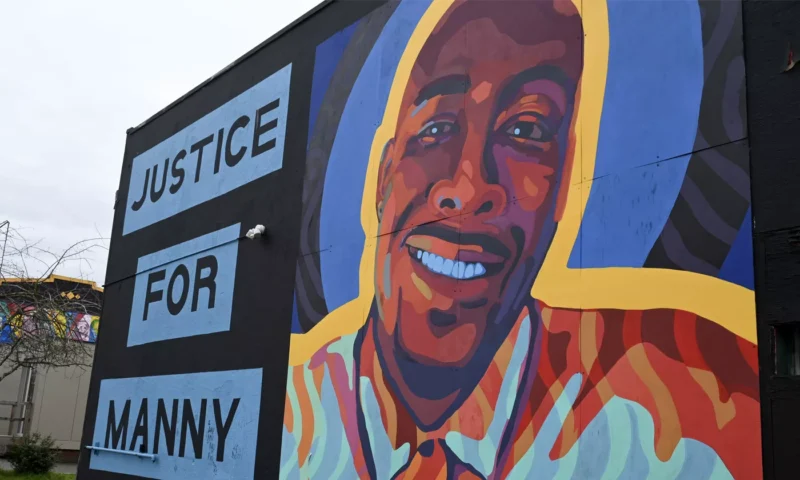
This month marks four years since Manuel Ellis, a 33-year-old African American man, was killed by Tacoma police. Despite the all-too-familiar injustice of the killing, something happened in the aftermath that had never before occurred in Washington state: The police who killed him were put on trial for murder.
Although the officers were found not guilty, the trial itself would not have happened at all if not for the Puyallup tribe and their years-long struggle to change the law that protected police in Washington from being prosecuted for killing suspects in the line of duty.
The Puyallup tribe of Washington has always been a protector of Native rights, especially during the Red Power movement of the 1960s and 1970s. They fought back when the state of Washington tried to take away their treaty-protected fishing rights during the fishing wars of the 1970s.
[…]
They never backed down at these and many other direct actions. So when one of their own, Puyallup tribal member Jacqueline Salyers, was brutally and senselessly gunned down by Tacoma police in 2016, they consulted with the elders who had organized and led many of the tribe’s early direct actions.
The result was the passage of the nation’s first police accountability bill, Washington state’s Initiative 940, which removed the immunity the police once had that historically allowed them to murder citizens with impunity.
Learn more about the events leading to this bill.
Ellis’ death is like many that inspired the Black Lives Matter movement.
Comments Are Welcome
Note: We moderate submissions in order to create a space for meaningful dialogue, a space where museum visitors – adults and youth –– can exchange informed, thoughtful, and relevant comments that add value to our exhibits.
Racial slurs, personal attacks, obscenity, profanity, and SHOUTING do not meet the above standard. Such comments are posted in the exhibit Hateful Speech. Commercial promotions, impersonations, and incoherent comments likewise fail to meet our goals, so will not be posted. Submissions longer than 120 words will be shortened.
See our full Comments Policy here.