How Race, Gender And Fatigue Have Affected The Coverage Of Renisha McBride’s Death
Share
Explore Our Galleries









Breaking News!
Today's news and culture by Black and other reporters in the Black and mainstream media.
Ways to Support ABHM?
By Rahel Gebreyes, HuffPost Live
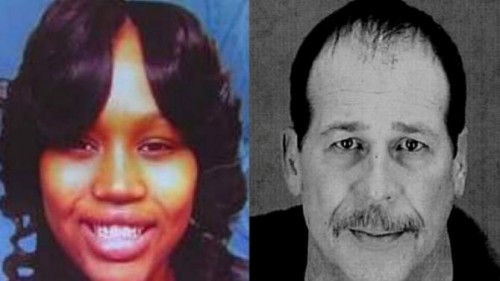
Renisha McBride and the man charged with second-degree murder in her death, Dearborn Heights, Mich., resident Theodore P. Wafer (Dearborn Heights Police)
It’s no secret — the Trayvon Martin and Renisha McBride killings have striking similarities. Both were young black victims and in each case, the killers claimed self-defense. But despite the parallels, it appears that the two cases are being treated differently — even within the black community.
Although the Martin case elicited strong opinions and outrage from various communities, these same circles seem to have stayed quiet about McBride.
“I haven’t seen a lot about this in my newsfeed. I haven’t seen a lot of people posting about Renisha, said Brittney Cooper, Assistant Professor of Women’s and Gender Studies and Africana Studies at Rutgers University.
As Cooper explained in a recent HuffPost Live conversation, much of the reactionary difference could be explained by the sheer number of African American killings that have taken place recently.
“A lot of it’s fatigue. I mean we’re all heartbroken this week over the killing of Eric Garner last week,” she told host Marc Lamont Hill. “So, you know, it’s like every other week we’ve got somebody else being hemmed up by the police. Two weeks before that it was the detaining of Ursula Orr and slamming her on the ground in Arizona…” she said.
Fatigue aside, there may be another reason that could explain why McBride’s story hasn’t had the same impression that Martin’s did.
“While there is a historical narrative that shows black men have faced violence from their white counterparts, we don’t often acknowledge that “black women have these violent encounters with white folks too,” Cooper said. “I don’t know that we know how to think about, fully, what happens when the kind of violence that we’d usually think would happen to a black man, then happens to black women.”
But the question of gender in McBride’s situation runs even deeper.
“Studies show that black women are frequently misperceived as black men or are often thought to be masculine and stronger than they actually are physically, Cooper said. “So there’s all kinds of stuff here going on about the misperceptions of femininity.”
Watch the video interview of Professor Brittney Cooper here.
Read more Breaking News here.
Comments Are Welcome
Note: We moderate submissions in order to create a space for meaningful dialogue, a space where museum visitors – adults and youth –– can exchange informed, thoughtful, and relevant comments that add value to our exhibits.
Racial slurs, personal attacks, obscenity, profanity, and SHOUTING do not meet the above standard. Such comments are posted in the exhibit Hateful Speech. Commercial promotions, impersonations, and incoherent comments likewise fail to meet our goals, so will not be posted. Submissions longer than 120 words will be shortened.
See our full Comments Policy here.