Hollywood’s Race Problem
Share
Explore Our Galleries









Breaking News!
Today's news and culture by Black and other reporters in the Black and mainstream media.
Ways to Support ABHM?
By Kia Makarechi, HuffingtonPost
In bleak situations, incremental improvements can be mistaken for big time progress. So it goes with Hollywood’s consistent inability to include actors of color.
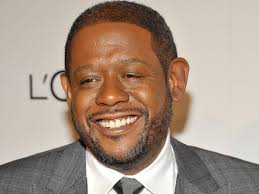
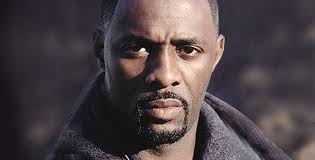
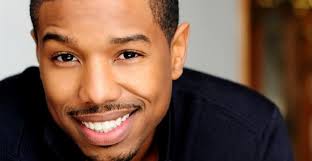
Popular critical consensus suggests that we may have as many as four black Best Actor nominees: Chiwetel Ejiofor (“12 Years a Slave”), Idris Elba (“Mandela: Long Walk to Freedom”), Forest Whitaker (“Lee Daniels’ The Butler”) and Michael B. Jordan (“Fruitvale Station”). Ejiofor is currently favored to win the category, where he’ll probably be joined by the likes of Tom Hanks (“Captain Phillips”), Robert Redford (“All Is Lost”) and Bruce Dern (“Nebraska”).
That these men of color are even being discussed in awards blogger circles is certainly cause for celebration, because each of their films presents a perspective that doesn’t get much play in Hollywood. But insofar as these four movies are important, they are also limited by their veracity. They’re all based on true stories [.]
Put another way, these roles have to be played by black actors. Each of these men has more than earned the nominations they’re expected to receive (now’s a good time to pinch in some salt: awards bloggers love to shower performances with praise, but nominations are certainly not guaranteed), but the fact that they’re generally only rewarded for roles that literally could not have been given to white actors is cause for concern.
[…]
The situation isn’t much better at the Golden Globes, where Morgan Freeman’s performance as a chauffeur who triumphs over racism in “Driving Miss Daisy” joins the otherwise identical list of Best Actor winners. (Nor, it’s worth noting, does the picture improve when including Best Actor nominees at the Oscars, a class that includes blacks playing “black roles” such as Will Smith in “Ali,” Don Cheadle in “Hotel Rwanda,” Terrence Howard in “Hustle & Flow,” Freeman in “Invictus,” Washington in “Malcom X,” Laurence Fishburne in “What’s Love Got to Do With It,” etc.)
[…]
True equality in the Best Actor race doesn’t mean only rewarding black men in roles white men could never play. Instead, we’ll know when Hollywood casting directors and the Academy of Motion Picture Arts and Sciences view people of color as deserving of equal opportunities to shine when a black man in the role of a fictional caring father, son, teacher, student, doctor, author or otherwise non-racially coded character is nominated for and wins Best Actor.
To read the full article, click here.
For more breaking news, click here.
Comments Are Welcome
Note: We moderate submissions in order to create a space for meaningful dialogue, a space where museum visitors – adults and youth –– can exchange informed, thoughtful, and relevant comments that add value to our exhibits.
Racial slurs, personal attacks, obscenity, profanity, and SHOUTING do not meet the above standard. Such comments are posted in the exhibit Hateful Speech. Commercial promotions, impersonations, and incoherent comments likewise fail to meet our goals, so will not be posted. Submissions longer than 120 words will be shortened.
See our full Comments Policy here.