From Slavery to Ferguson: America’s History of Violence Toward Blacks
Share
Explore Our Galleries









Breaking News!
Today's news and culture by Black and other reporters in the Black and mainstream media.
Ways to Support ABHM?
By Breanna Edwards, The Root
John Matteson, Distinguished Professor of English at John Jay College of Criminal Justice, talks about slavery within the context of American law, and how slavery may have helped frame today’s attitudes and behaviors.
Recent events haunting black communities like ghosts of a violent era that many thought long gone—such as the tragic deaths of Trayvon Martin, Eric Garner and Michael Brown—hark back to a collective memory of enslavement.

COURTESY OF JOHN JAY COLLEGE OF CRIMINAL JUSTICE
John Matteson, Distinguished Professor of English at John Jay College of Criminal Justice in New York City, believes that the violence exhibited today is contextually linked to slavery and has become part of the culture over time.
“Slavery was a form of privatized law enforcement,” Matteson explained to The Root. “What it did was take a number of the powers that are typically reserved to the government—the power to discipline … the power over another person’s life—and it conferred those powers on private individuals. And there’s this continuing undercurrent in particularly Southern culture where there’s a reluctance to get the government involved if you can avoid it, because there’s just a sort of general distrust of centralized authority.”
These are some of the connections that Matteson hopes students taking his free eight-week course, Literature & Law of American Slavery, will be able to absorb and question as they go through his class….
“In terms of the underlying interest, one of the things that I’m really fascinated by is the way in which this epoch in our history, which seems to have taken place so long ago, continues to rear its head and to affect attitudes in our culture, ranging from law enforcement to race relations to the ways that parents treat their children,” Matteson continued.
He referenced an August segment on MSNBC host Melissa Harris-Perry’s show, in which she spoke about the recent deaths of young black men at the hands of law enforcement and the correlation to the infamous Supreme Court Dred Scott decision in which then-Justice Roger Taney said in 1857 that the black man has “no rights which the white man was bound to respect.”…
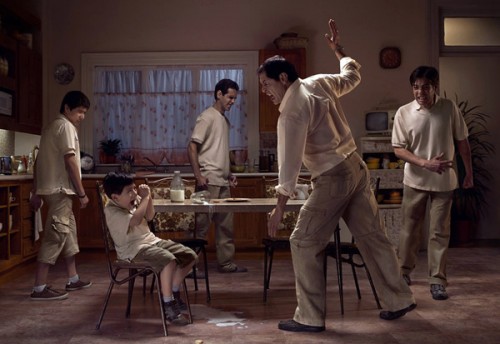
Of course, these matters aren’t solely about race; they also have a lot to do with the generational nature of violence. “I would suspect also that when you find a violent cop, or somebody who’s excited about the prospect of vigilante justice, I would guess … that you’re going to find that those abusive cops and the gun-toting nuts are very often people who themselves have experienced abuse,” Matteson said.
“Because abuse, as we know, is something that replicates itself from generation to generation,” he continued, “and if people start their lives by viewing everything through a lens of violence, it’s going to turn up in racial violence, but it’s also going to turn up in domestic violence. It’s going to turn up in the dysfunction of the individual human being in a myriad of ways.”
Read the full article.
Read more Breaking News.
Comments Are Welcome
Note: We moderate submissions in order to create a space for meaningful dialogue, a space where museum visitors – adults and youth –– can exchange informed, thoughtful, and relevant comments that add value to our exhibits.
Racial slurs, personal attacks, obscenity, profanity, and SHOUTING do not meet the above standard. Such comments are posted in the exhibit Hateful Speech. Commercial promotions, impersonations, and incoherent comments likewise fail to meet our goals, so will not be posted. Submissions longer than 120 words will be shortened.
See our full Comments Policy here.