Fitting Race in a Box
Share
Explore Our Galleries









Breaking News!
Today's news and culture by Black and other reporters in the Black and mainstream media.
Ways to Support ABHM?
By K.K. Rebecca Lai, New York Times
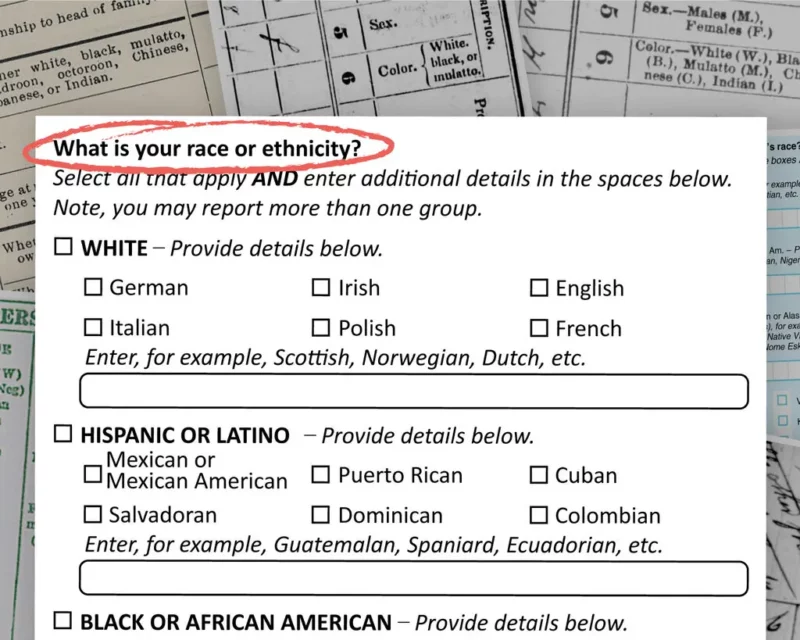
In light of the Biden administration’s proposed changes to census forms, we wanted to understand how census categories for race and ethnicity have evolved over the last 230 years and how they have shaped American identities. As we dug into historical documents, we found the census often reflected the country’s changing attitudes.
[…]
We sifted through copies of each decennial census from 1790 through 2020. Some were handwritten, some were yellowed, and, in later years, printed in color. We found that almost none of them categorized race in the exact same way. Each change indicated an incremental shift in how the nation perceived racial and ethnic identities at that time.
We talked to historians and demographers who explained the implications of these categories. The first census in 1790 separated free “white” people from other free people and enslaved people. In 1890, the census identified African Americans by the fraction of their African heritage: “Black,” “mulatto,” “quadroon” and “octoroon.” These terms stamped in old documents are a stark reminder of U.S. history.
[…]
With the year 1970 came a significant shift in the census, when people were allowed to choose their race, rather than having a census taker do so. The census is now a marker of self-identification instead of an outsider’s perception. That same year, a new question was added to assess the size of the Hispanic population.
Historically, some edits to census race boxes reflected changes in policy or public sentiment. As the nation’s laws on slavery shifted, the census began phasing out the counting of enslaved people and instead introduced new terms to define the Black population.
Other changes were borne out of a push and pull between how the government saw individuals and how they wanted to identify. For example, the antiquated term “Negro” was used in nine decennial censuses until 2010.
Read about the new proposal.
Comments Are Welcome
Note: We moderate submissions in order to create a space for meaningful dialogue, a space where museum visitors – adults and youth –– can exchange informed, thoughtful, and relevant comments that add value to our exhibits.
Racial slurs, personal attacks, obscenity, profanity, and SHOUTING do not meet the above standard. Such comments are posted in the exhibit Hateful Speech. Commercial promotions, impersonations, and incoherent comments likewise fail to meet our goals, so will not be posted. Submissions longer than 120 words will be shortened.
See our full Comments Policy here.