Fire That Kills 6 Children Puts Focus on ‘Dangerous’ Section 8 Housing
Share
Explore Our Galleries









Breaking News!
Today's news and culture by Black and other reporters in the Black and mainstream media.
Ways to Support ABHM?
Jennifer Porter Gore, Word in Black
Young siblings, including a 17-month-old, died in a house that failed a city inspection six months earlier.
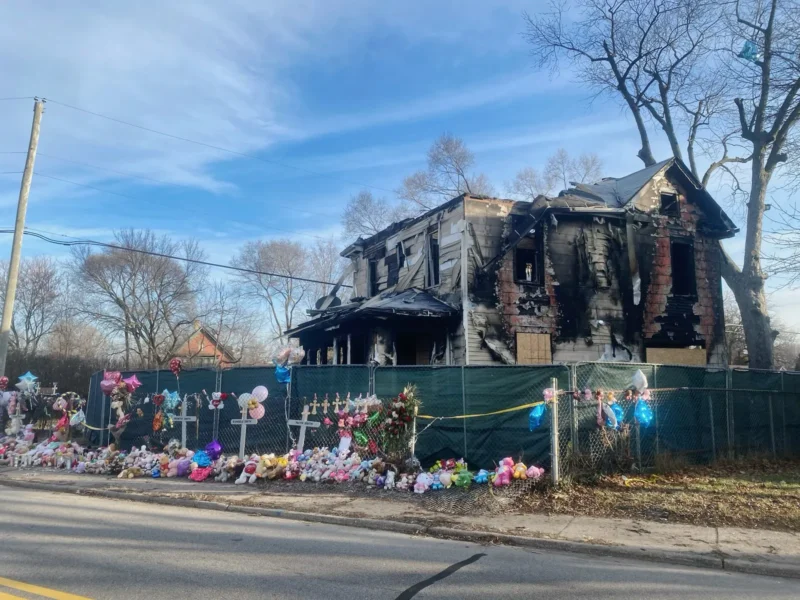
Last summer, when housing inspectors combed through a four-bedroom house in South Bend, Indiana, they reportedly found so many code violations — roaches, a collapsing kitchen ceiling, and widespread electrical problems — that the tenant living there on a low-income public housing voucher was relocated.
Yet the ramshackle house in the city of 103,000, located 72 miles east of Chicago, wasn’t vacant for long: 67-year-old David Smith and his six young children soon moved in.
Then, in late January, on a frigid night in South Bend, fire swept through the two-story clapboard home at 222 N. LaPorte Ave. Smith survived, but all the children — ranging in age from an 11-year-old to a 17-month-old baby — were killed.
The tragedy in a predominantly Black neighborhood shocked the community, raising questions about the property management company’s statement they made repairs before renting to Smith. The fire’s cause is under investigation.
But the deadly blaze also put a spotlight on the nation’s affordable housing crisis, a situation that disproportionately affects Black families. The situation is so dire, experts say, that many people with few resources and even fewer housing options are forced to live in homes that are dilapidated, vermin-infested, and unsafe.
Explore this virtual exhibit to learn about historical segregation practices that forced Black families into inadequate housing.
Find more Breaking News here.
Comments Are Welcome
Note: We moderate submissions in order to create a space for meaningful dialogue, a space where museum visitors – adults and youth –– can exchange informed, thoughtful, and relevant comments that add value to our exhibits.
Racial slurs, personal attacks, obscenity, profanity, and SHOUTING do not meet the above standard. Such comments are posted in the exhibit Hateful Speech. Commercial promotions, impersonations, and incoherent comments likewise fail to meet our goals, so will not be posted. Submissions longer than 120 words will be shortened.
See our full Comments Policy here.