Federal government taken to court for reworking Black farmers debt relief program
Share
Explore Our Galleries









Breaking News!
Today's news and culture by Black and other reporters in the Black and mainstream media.
Ways to Support ABHM?
By Phil McCausland, NBC News
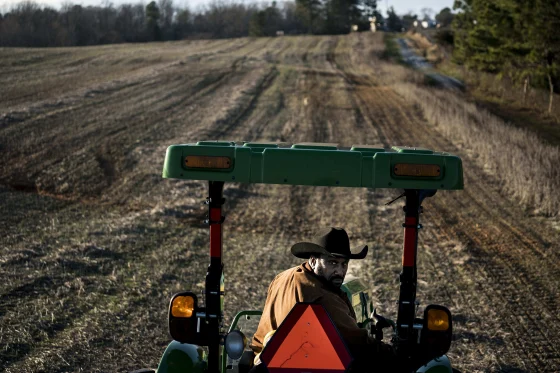
Minority farmers are taking the federal government to court for watering down a $4 billion debt relief program aimed at helping the dwindling number of people of color who continue to work the country’s farmlands, according to a lawsuit filed last week.
The plaintiffs in the class-action lawsuit said the government went back on its word to Black and other minority farmers when the relief program, originally pushed through by Democrats in Congress, was reworked and broadened after white farmers balked.
“They broke their promise to Black farmers and other farmers of color,” John Boyd, a plaintiff and the president of the National Black Farmers Association, told NBC News on Wednesday just before he held a press conference on the matter.
The program, which was created by the American Rescue Plan of 2021, was intended to help minority farmers pay off Department of Agriculture loans and provide other forms of debt relief and aid to those racial and ethnic groups that have faced discrimination from the government in the past. It covered up to 120% of the debts of farmers who are members of groups that have historically been discriminated against based on their race or ethnicity.
The $4 billion was never delivered to Black farmers and other people of color, however.
For more than 18 months, the money has been held up in a court battle, as white farmers and others challenged the allotment they would not be able to access and claimed it was a violation of their constitutional rights.
Black farmers have also made news by joining collectives.
ABHM’s breaking news includes more stories like this.
Comments Are Welcome
Note: We moderate submissions in order to create a space for meaningful dialogue, a space where museum visitors – adults and youth –– can exchange informed, thoughtful, and relevant comments that add value to our exhibits.
Racial slurs, personal attacks, obscenity, profanity, and SHOUTING do not meet the above standard. Such comments are posted in the exhibit Hateful Speech. Commercial promotions, impersonations, and incoherent comments likewise fail to meet our goals, so will not be posted. Submissions longer than 120 words will be shortened.
See our full Comments Policy here.