Evanston’s groundbreaking reparations program challenged by lawsuit from a conservative activist group
Share
Explore Our Galleries









Breaking News!
Today's news and culture by Black and other reporters in the Black and mainstream media.
Ways to Support ABHM?
By Andy Rose, CNN
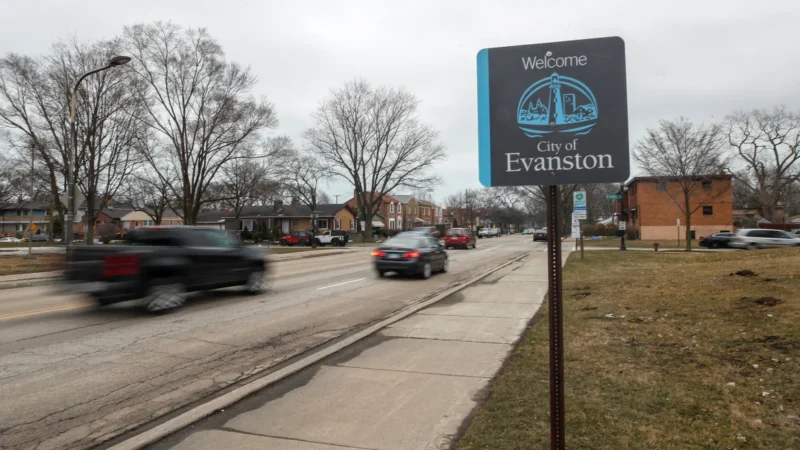
The nation’s first government program providing cash reparations to Black residents in response to past discriminatory housing practices is being challenged in court by Judicial Watch, a conservative activist group.
The lawsuit, filed last month, against the city of Evanston, Illinois, a suburb of Chicago, alleges the program’s requirement that applicants state whether they and their ancestors identify as Black or African American “violates the Equal Protection Clause of the Fourteenth Amendment to the U.S. Constitution.”
A push for reparations gained momentum following the national uprising in the aftermath of George Floyd’s killing in 2020. Measures aimed at exploring ways to address the racial wealth gap – and discriminatory practices that contributed to it – have been discussed in cities like San Francisco and St. Paul, Minnesota, and on the state-level in California.
Evanston’s reparations program was established in 2019 with the intention of redressing the pattern of housing discrimination and segregation that took place in the city from 1919 to 1969. Black residents who lived in the city during that time – as well as their children, grandchildren and great-grandchildren – can apply for $25,000 in housing assistance.
The program was amended last year to provide the option of a direct cash payment.
CNN has more details about the role of race in this issue.
Learn more about race and how it’s created by racism.
Comments Are Welcome
Note: We moderate submissions in order to create a space for meaningful dialogue, a space where museum visitors – adults and youth –– can exchange informed, thoughtful, and relevant comments that add value to our exhibits.
Racial slurs, personal attacks, obscenity, profanity, and SHOUTING do not meet the above standard. Such comments are posted in the exhibit Hateful Speech. Commercial promotions, impersonations, and incoherent comments likewise fail to meet our goals, so will not be posted. Submissions longer than 120 words will be shortened.
See our full Comments Policy here.