Enslaved People Lived Here.These Museums Want You to Know
Share
Explore Our Galleries









Breaking News!
Today's news and culture by Black and other reporters in the Black and mainstream media.
Ways to Support ABHM?
By Tariro Mzezewa, The New York Times
A few years ago, people touring the Owens-Thomas House and Slave Quarters in Savannah, Ga., would have heard a lot about George Owens, the lawyer, farmer and Congressional representative who lived in the massive neoclassical home in 1833. And about banker and slave trader Richard Richardson, for whom the house was built in 1816. They might have heard Emma Katin’s name, but not about how the enslaved black woman spent most of her nights sleeping on the wooden floors of the house, so that she could be available at all hours to the infants in the Owens family….
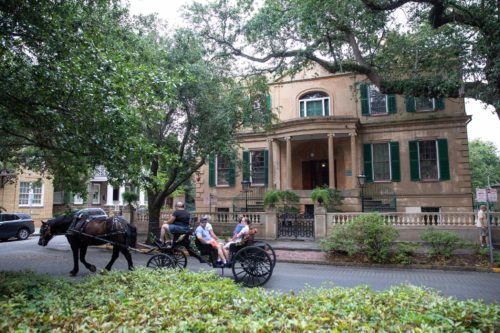
A carriage tour passes in front of the Owens-Thomas House and Slave Quarters, in Savannah, Ga., which is owned by Telfair Museums and has been leading efforts to focus tours on the enslaved people who lived in the house./Hunter McRae
And there’s a good chance that guests would not have heard about the 400 other slaves the Owenses had on their other nearby properties.
“Those pieces of the story would have been missing because she would have been treated as an accessory to the Owens’ lives,” said Shannon Browning-Mullis, a curator of history and decorative arts for Telfair Museums…
In cities including Savannah and Charleston, S.C., where Confederate statues, elegant mansions and plantation weddings are common, tourism has often taken the form of nostalgia for the antebellum South, Southern charm and Southern hospitality. For years, tours of historic homes would focus on their architecture and fine furniture, but not on how the wealth so clearly displayed depended on enslaved labor.
There is a growing consensus among the interpreters who guide people through historic properties that by excluding stories of the enslaved, institutions like historical societies, museums and tour companies have sent the message that power and wealth were not directly connected to slavery, and racism, and erased the stories of the black people who built these cities.
Now that’s changing.
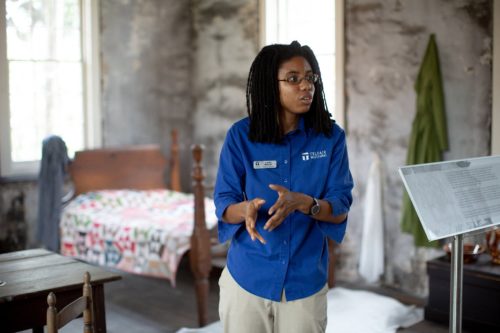
Tours led by the historical interpreter Lacey Wilson of the Owens-Thomas House and Slave Quarters focus on the “people with the most amount of power on this lot and people with the least amount of power,” she said on a recent tour./Hunter McRae
Read more breaking news here
Read also “The Only Museum Solely Memorializing Slavery” here
Comments Are Welcome
Note: We moderate submissions in order to create a space for meaningful dialogue, a space where museum visitors – adults and youth –– can exchange informed, thoughtful, and relevant comments that add value to our exhibits.
Racial slurs, personal attacks, obscenity, profanity, and SHOUTING do not meet the above standard. Such comments are posted in the exhibit Hateful Speech. Commercial promotions, impersonations, and incoherent comments likewise fail to meet our goals, so will not be posted. Submissions longer than 120 words will be shortened.
See our full Comments Policy here.