Does acting like ‘a man’ depress black men?
Share
Explore Our Galleries









Breaking News!
Today's news and culture by Black and other reporters in the Black and mainstream media.
Ways to Support ABHM?
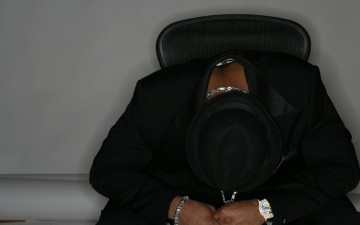
Studies have shown that men in general tend to be more withdrawn about their feelings. African-American men seem to suffer even more than the average man, due to racial discrimination. However, professor and researcher Wizdom Powell Hammond discovered through research that men who speak out and express their feelings are less likely to become depressed.
In a new study published in the big-deal American Journal of Public Health, UNC Chapel Hill professor and researcher Wizdom Powell Hammond, Ph.D. found that brothers who openly discuss their everyday struggles with racial discrimination are less likely to suffer depression than those who keep their feelings inside.
This is no small thing given that suicide is the third most common cause of death for Black boys and men ages 15 to 24 and that Black men are five times more likely to kill themselves than Black women. And note that these stats don’t include less dramatic forms of self-destruction like skipping preventative health screenings.
Read more of the article here.
You’ll find mental health stories in our breaking news archive.
Comments Are Welcome
Note: We moderate submissions in order to create a space for meaningful dialogue, a space where museum visitors – adults and youth –– can exchange informed, thoughtful, and relevant comments that add value to our exhibits.
Racial slurs, personal attacks, obscenity, profanity, and SHOUTING do not meet the above standard. Such comments are posted in the exhibit Hateful Speech. Commercial promotions, impersonations, and incoherent comments likewise fail to meet our goals, so will not be posted. Submissions longer than 120 words will be shortened.
See our full Comments Policy here.