Body cameras were supposed to hold police accountable – but getting footage is harder than you think
Share
Explore Our Galleries









Breaking News!
Today's news and culture by Black and other reporters in the Black and mainstream media.
Ways to Support ABHM?
By Natasha S. Alford, theGrio
Even veteran attorneys like Benjamin Crump describe getting police body camera footage as “daunting.”
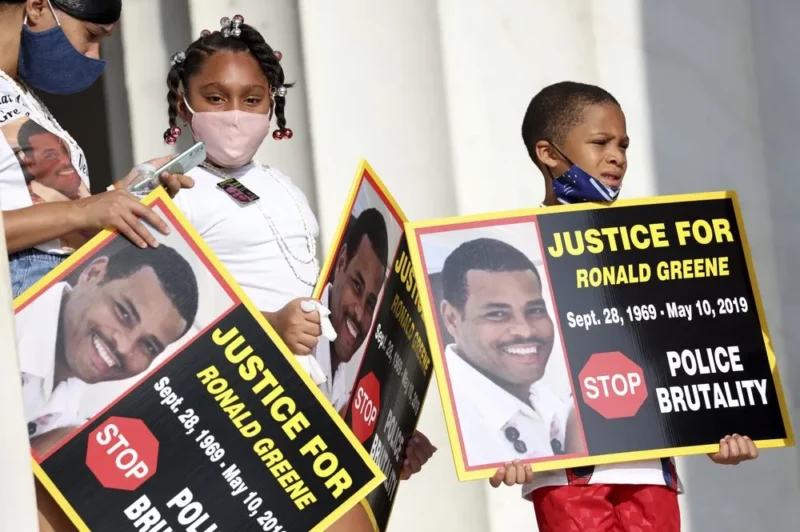
When Ronald Greene died at the hands of police, body cam footage was never meant to be seen.
In May 2019, troopers stopped Greene for a traffic violation near Monroe, Louisiana, and at the time, said the 49-year-old Black man fled and resisted arrest.
Lt. John Clary of the Louisiana State Police arrived at the scene moments after troopers physically restrained Greene by punching and stunning him. But Clary denied to investigators that there was body camera footage of Greene’s arrest. John Peters, another state trooper present during Greene’s final moments, allegedly issued the following warning, according to a judge on the case:
“Don’t send the videos unless the [DA] asks for it.”
The public remained unaware of the videos for two years until the Associated Press obtained and published them.
Body camera footage has long been touted as an essential accountability tool in police reform. From Louisiana to Tennessee to Wisconsin, there have been high-profile cases of Black people harmed, mistreated, or killed at the hands of police, where body camera footage was withheld from the public.
“It has been daunting,” renowned civil rights attorney Benjamin Crump said in an interview with theGrio. “It’s very difficult in most states to get video released. They hide behind these oppressive laws that say, ‘Well until we finish the criminal investigation, we won’t release the video.’ And then they just string along the investigation for months, sometimes years. By the time they release the video, everybody’s swept your loved one under the rug.”
The full article details the heartbreaking struggles of families seeking justice for their loved ones amidst police pushback.
Biden signed a police reform executive order last year, which could be undone by a new president.
More Breaking News.
Comments Are Welcome
Note: We moderate submissions in order to create a space for meaningful dialogue, a space where museum visitors – adults and youth –– can exchange informed, thoughtful, and relevant comments that add value to our exhibits.
Racial slurs, personal attacks, obscenity, profanity, and SHOUTING do not meet the above standard. Such comments are posted in the exhibit Hateful Speech. Commercial promotions, impersonations, and incoherent comments likewise fail to meet our goals, so will not be posted. Submissions longer than 120 words will be shortened.
See our full Comments Policy here.