Black Lives Matter
Explore Our Online Exhibits
Breaking News

Worldwide Community Events
Week 4
- Sun 27
- Mon 28
- Tue 29
- Wed 30
- Thu 1
- Fri 2
- Sat 3
- Sun 4
- Mon 5
- Tue 6
- Wed 7
- Thu 8
- Fri 9
- Sat 10
- Sun 11
- Mon 12
- Tue 13
- Wed 14
- Thu 15
- Fri 16
- Sat 17
- Sun 18
- Mon 19
- Tue 20
- Wed 21
- Thu 22
- Fri 23
- Sat 24
- Sun 25
- Mon 26
- Tue 27
- Wed 28
- Thu 29
- Fri 30
- Sat 31
-
27September
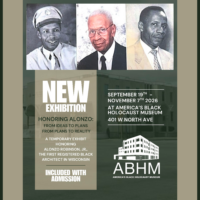
-
28September
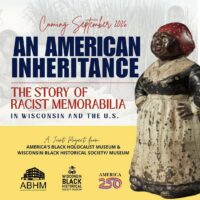
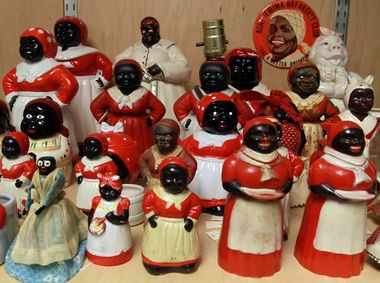
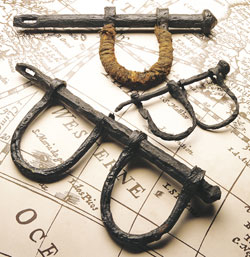
An American Inheritance: The Story of Racist Memorabilia
Wisconsin Black Historical Society in MKE28September -
29September
An American Inheritance: The Story of Racist Memorabilia
Wisconsin Black Historical Society in MKE29September -
30September
An American Inheritance: The Story of Racist Memorabilia
Wisconsin Black Historical Society in MKE30September -
01October
An American Inheritance: The Story of Racist Memorabilia
Wisconsin Black Historical Society in MKE01October -
02October
An American Inheritance: The Story of Racist Memorabilia
Wisconsin Black Historical Society in MKE02October -
03October
An American Inheritance: The Story of Racist Memorabilia
Wisconsin Black Historical Society in MKE03October03October 9:00 AM - 4:00 PM
18th Annual Black Women’s Wellness Day
Monona Terrace Community & Convention Center -
04October
An American Inheritance: The Story of Racist Memorabilia
Wisconsin Black Historical Society in MKE04October -
05October
An American Inheritance: The Story of Racist Memorabilia
Wisconsin Black Historical Society in MKE05October -
06October
An American Inheritance: The Story of Racist Memorabilia
Wisconsin Black Historical Society in MKE06October -
07October
An American Inheritance: The Story of Racist Memorabilia
Wisconsin Black Historical Society in MKE07October -
08October
An American Inheritance: The Story of Racist Memorabilia
Wisconsin Black Historical Society in MKE08October08October
Silicon Valley African Film Festival 2026
The Historic Hoover Theatre, San Jose -
09October
An American Inheritance: The Story of Racist Memorabilia
Wisconsin Black Historical Society in MKE09October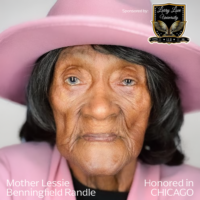
Mother Lessie Benningfield Randle Comes to Chicago
Obama Presidential Center09October09OctoberSilicon Valley African Film Festival 2026
The Historic Hoover Theatre, San Jose -
10October
An American Inheritance: The Story of Racist Memorabilia
Wisconsin Black Historical Society in MKE10OctoberMother Lessie Benningfield Randle Comes to Chicago
Obama Presidential Center10October10OctoberSilicon Valley African Film Festival 2026
The Historic Hoover Theatre, San Jose -
11October
An American Inheritance: The Story of Racist Memorabilia
Wisconsin Black Historical Society in MKE11OctoberMother Lessie Benningfield Randle Comes to Chicago
Obama Presidential Center11October11OctoberSilicon Valley African Film Festival 2026
The Historic Hoover Theatre, San Jose -
12October
An American Inheritance: The Story of Racist Memorabilia
Wisconsin Black Historical Society in MKE12October -
13October
An American Inheritance: The Story of Racist Memorabilia
Wisconsin Black Historical Society in MKE13October -
14October
An American Inheritance: The Story of Racist Memorabilia
Wisconsin Black Historical Society in MKE14October -
15October
An American Inheritance: The Story of Racist Memorabilia
Wisconsin Black Historical Society in MKE15October15October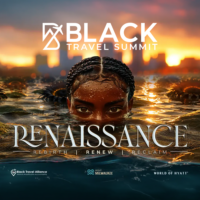
Black Travel Summit 2026
Baird Center, Milwaukee -
16October
An American Inheritance: The Story of Racist Memorabilia
Wisconsin Black Historical Society in MKE16October16OctoberBlack Travel Summit 2026
Baird Center, Milwaukee -
17October
An American Inheritance: The Story of Racist Memorabilia
Wisconsin Black Historical Society in MKE17October17OctoberBlack Travel Summit 2026
Baird Center, Milwaukee -
18October
An American Inheritance: The Story of Racist Memorabilia
Wisconsin Black Historical Society in MKE18October18OctoberBlack Travel Summit 2026
Baird Center, Milwaukee -
19October
An American Inheritance: The Story of Racist Memorabilia
Wisconsin Black Historical Society in MKE19October -
20October
An American Inheritance: The Story of Racist Memorabilia
Wisconsin Black Historical Society in MKE20October -
21October
An American Inheritance: The Story of Racist Memorabilia
Wisconsin Black Historical Society in MKE21October -
22October
An American Inheritance: The Story of Racist Memorabilia
Wisconsin Black Historical Society in MKE22October -
23October
An American Inheritance: The Story of Racist Memorabilia
Wisconsin Black Historical Society in MKE23October23October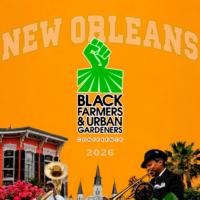
14th Annual Black Farmers and Urban Gardeners National Conference
Dillard University -
24October
An American Inheritance: The Story of Racist Memorabilia
Wisconsin Black Historical Society in MKE24October24October14th Annual Black Farmers and Urban Gardeners National Conference
Dillard University24October
-
25October
An American Inheritance: The Story of Racist Memorabilia
Wisconsin Black Historical Society in MKE25October25October14th Annual Black Farmers and Urban Gardeners National Conference
Dillard University -
26October
An American Inheritance: The Story of Racist Memorabilia
Wisconsin Black Historical Society in MKE26October -
27October
An American Inheritance: The Story of Racist Memorabilia
Wisconsin Black Historical Society in MKE27October -
28October
An American Inheritance: The Story of Racist Memorabilia
Wisconsin Black Historical Society in MKE28October -
29October
An American Inheritance: The Story of Racist Memorabilia
Wisconsin Black Historical Society in MKE29October -
30October
An American Inheritance: The Story of Racist Memorabilia
Wisconsin Black Historical Society in MKE30October -
31October
An American Inheritance: The Story of Racist Memorabilia
Wisconsin Black Historical Society in MKE31October31October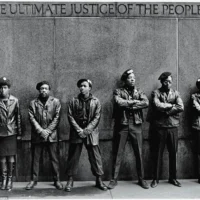
Share
Black Lives Matter, sometimes shortened to “BLM,” is an anti-racist movement that highlights racism and the disparities that evolve from racism, including police brutality and other anti-Black violence. Black Lives Matter gained popularity online after the murder of George Floyd by a Minneapolis police officer was recorded and shared by a bystander. In response to the video, which shows officer Derek Chauvin kneeling on Floyd’s neck for 8 minutes and 46 seconds, protests erupted around the world. These protests were often met with police violence, some of which has been declared illegal while protestors have been falsely arrested.
The momentum continued to draw attention to police violence, both as more Black lives were taken and as previous stories came to light. Trayvon Martin, Michael Brown, Eric Garner, and Breonna Taylor are also victims who the movement has recognized. Thanks to the attention given to these cases, some of the perpetrators have finally faced justice, including Derek Chauvin, who has been convicted with murder.
BLM also encouraged police reform and greater investigations into policing, with some activists calling for reparations or to defund the police and reroute funds to other social programs that may be more effective. The movement has further brought attention to international conflict and raised funds during the COVID-19 pandemic. In some ways, the movement reflects the previous Civil Rights Movement, which lasted through the 1960s to 1980s including the Black Panther Party, which provided community assistance. Because of this, the movement has been recognized for its historical significance.
However, the movement has come under fire for protests that turned violent, for focusing too much on Black men, and for mismanaging funds raised.
A nonprofit organization, The Black Lives Matter Global Network Foundation, also exists. Some people may refer to it as simply “Black Lives Matter.”
See all of our Black Lives Matter content below, starting with the most recent.

Of all the ways that John Lewis influenced American life and politics, his indelible impact on young people may be among the most enduring. From student activist to elder statesman, Lewis continually encouraged the nation’s youth to start “good trouble” — and modeled just how to do that.

15 million to 26 million people in the United States have participated in demonstrations over the death of George Floyd and others in recent weeks making the recent protests the largest movement in US history.

The global uprising against racist police brutality that ignited in the United States has spread to the Blackest continent of all, showing that the aftershocks of class struggle in imperialist countries are often felt in the regions they historically exploit and oppress.

In the month since George Floyd’s death at the hands of the police, the world has witness some of the most engaged, passionate and determined anti-racism protests and calls-to-action in recent memory.

With his triumphal stride through the square to historical St. John’s Episcopal Church, Trump had hoped to appear strong and dominant, and to dispel the narrative of him hiding in the secured White House bunker during evening protests outside. Demanding a show of force, he sought to make the nation’s capital a shining example of how to control the streets amid racial unrest.

The recent protests against racial inequality could push legislation on policing to passage on Utah’s Capitol Hill, as well as a proposed amendment that officially repeals “slavery” from the state constitution.

Introduction To This Series: This post is one installment in an ongoing news series: a “living history” of the current national and international uprising for justice. Today’s movement descends directly from the many earlier civil rights struggles against repeated injustices and race-based violence, including the killing of unarmed Black people. The posts in this series serve as a timeline of the uprising that began on May 26, 2020, the day after a Minneapolis police officer killed an unarmed Black man, George Floyd, by kneeling on his neck. The viral video of Floyd’s torturous suffocation brought unprecedented national awareness to the ongoing demand to truly make Black Lives Matter in this country. The posts in this series focus on stories of the particular killings that have spurred the current uprising and on the protests taking place around the USA and across the globe. Sadly, thousands of people have lost their lives to systemic racial, gender, sexuality, judicial, and economic injustice. The few whose names are listed here represent the countless others lost before and since. Likewise, we can report but a few of the countless demonstrations for justice now taking place in our major cities, small towns, and suburbs. To view the entire series of Rising Up for Justice! posts, insert “rising up” in the search bar above. King Leopold II statues are being removed in Belgium. Who was he? By Richard Allen Greene, CNN June 11, 2020 While statues of slave traders, imperialists and US Confederate leaders are being torn down, removed or protested against in the English-speaking world, Belgium has begun removing statues of its one-time King Leopold II. Never heard of him. Who was King Leopold II? One of the most brutal and ambitious of the 19th century European exploiters of Africa, Leopold II was king of Belgium for more than 40 years, from 1865 to 1909. A first cousin of Queen Victoria, he ruled at a time when Europeans were colonizing — that is, conquering — other parts of the world. Leopold was responsible for a particularly cruel part of that conquest, during the so-called “Scramble for Africa.” What exactly did he do? Leopold hired the adventurer Henry Morton Stanley to explore the Congo River basin, signing purported treaties with local leaders along the way. Leopold then used the treaties to stake a claim to an enormous chunk of central Africa — more or less the territory that is now the Democratic Republic of Congo. Belgium then as now had a parliament and government that actually ran the country, and they did not support Leopold’s colonial plans, so he declared the “Congo Free State” to be his personal possession, not Belgium’s, and got other countries including the United States and European powers to recognize him as its “proprietor.” What did he get out of that? A huge fortune, for starters, based first on ivory and then on rubber when the automobile and bicycle industries took off. Leopold used a private army to coerce Africans to gather wild rubber from the vines of the…

George Floyd’s funeral and the public viewing that preceded it a day earlier have been a counterpoint to the fury that his death touched off in cities across America.

This is the first of a series of posts serving as a timeline of the uprising that began on May 26, 2020, the day after a Minneapolis police officer killed an unarmed Black man, George Floyd, by kneeling on his neck. Here are four stories of the senseless killings of unarmed African Americans that have brought unprecedented national awareness to the ongoing demand to truly make Black Lives Matter in this country.

NOW: Free At Last? Introduction By the 1980s, Black America came to another roadblock in the long struggle to full equality. After the Civil Rights and Black Power movements, there were many more black college graduates, professionals, and business people than before. Many of them believed they would soon reach the American Dream. Working-class blacks, however, faced a very different reality. Factory jobs left the inner cities and the industrial South. This led to high black unemployment. The dreams that had brought many black people North during the Great Migration were quickly dying. White flight to well-funded suburban schools broke the back of school desegregation ordered by the Supreme Court. Police brutality led to black unrest and rebellion in several cities. The most well-known occurred in Los Angeles in 1992 after the Rodney King beating. The War on Drugs began to require harsher sentences for drug offenses. These have been applied most often to African Americans. The number of blacks in prison has soared over the last thirty years, even when crime rates are at historic lows. Recent “justifiable homicides” of blacks by non-blacks have again raised questions about racial equality before the law. This situation is being called the “New Jim Crow.” Still, the advances of African Americans in all fields – and the election of our first black president – have given some reason to hope. Exhibits