Black Lives Matter
Explore Our Online Exhibits
Breaking News



Worldwide Community Events
Week 3
- Sun 27
- Mon 28
- Tue 29
- Wed 30
- Thu 1
- Fri 2
- Sat 3
- Sun 4
- Mon 5
- Tue 6
- Wed 7
- Thu 8
- Fri 9
- Sat 10
- Sun 11
- Mon 12
- Tue 13
- Wed 14
- Thu 15
- Fri 16
- Sat 17
- Sun 18
- Mon 19
- Tue 20
- Wed 21
- Thu 22
- Fri 23
- Sat 24
- Sun 25
- Mon 26
- Tue 27
- Wed 28
- Thu 29
- Fri 30
- Sat 31
-
27September
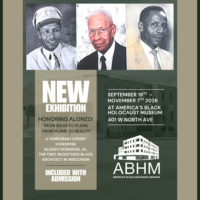
-
28September
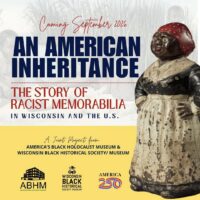
An American Inheritance: The Story of Racist Memorabilia
Wisconsin Black Historical Society in MKE28September -
29September
An American Inheritance: The Story of Racist Memorabilia
Wisconsin Black Historical Society in MKE29September -
30September
An American Inheritance: The Story of Racist Memorabilia
Wisconsin Black Historical Society in MKE30September -
01October
An American Inheritance: The Story of Racist Memorabilia
Wisconsin Black Historical Society in MKE01October -
02October
An American Inheritance: The Story of Racist Memorabilia
Wisconsin Black Historical Society in MKE02October -
03October
An American Inheritance: The Story of Racist Memorabilia
Wisconsin Black Historical Society in MKE03October03October 9:00 AM - 4:00 PM
18th Annual Black Women’s Wellness Day
Monona Terrace Community & Convention Center -
04October
An American Inheritance: The Story of Racist Memorabilia
Wisconsin Black Historical Society in MKE04October -
05October
An American Inheritance: The Story of Racist Memorabilia
Wisconsin Black Historical Society in MKE05October -
06October
An American Inheritance: The Story of Racist Memorabilia
Wisconsin Black Historical Society in MKE06October -
07October
An American Inheritance: The Story of Racist Memorabilia
Wisconsin Black Historical Society in MKE07October -
08October
An American Inheritance: The Story of Racist Memorabilia
Wisconsin Black Historical Society in MKE08October08October
Silicon Valley African Film Festival 2026
The Historic Hoover Theatre, San Jose -
09October
An American Inheritance: The Story of Racist Memorabilia
Wisconsin Black Historical Society in MKE09October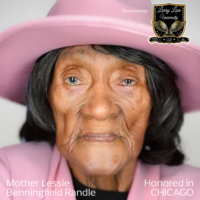
Mother Lessie Benningfield Randle Comes to Chicago
Obama Presidential Center09October09OctoberSilicon Valley African Film Festival 2026
The Historic Hoover Theatre, San Jose -
10October
An American Inheritance: The Story of Racist Memorabilia
Wisconsin Black Historical Society in MKE10OctoberMother Lessie Benningfield Randle Comes to Chicago
Obama Presidential Center10October10OctoberSilicon Valley African Film Festival 2026
The Historic Hoover Theatre, San Jose -
11October
An American Inheritance: The Story of Racist Memorabilia
Wisconsin Black Historical Society in MKE11OctoberMother Lessie Benningfield Randle Comes to Chicago
Obama Presidential Center11October11OctoberSilicon Valley African Film Festival 2026
The Historic Hoover Theatre, San Jose -
12October
An American Inheritance: The Story of Racist Memorabilia
Wisconsin Black Historical Society in MKE12October -
13October
An American Inheritance: The Story of Racist Memorabilia
Wisconsin Black Historical Society in MKE13October -
14October
An American Inheritance: The Story of Racist Memorabilia
Wisconsin Black Historical Society in MKE14October -
15October
An American Inheritance: The Story of Racist Memorabilia
Wisconsin Black Historical Society in MKE15October15October
Black Travel Summit 2026
Baird Center, Milwaukee -
16October
An American Inheritance: The Story of Racist Memorabilia
Wisconsin Black Historical Society in MKE16October16OctoberBlack Travel Summit 2026
Baird Center, Milwaukee -
17October
An American Inheritance: The Story of Racist Memorabilia
Wisconsin Black Historical Society in MKE17October17OctoberBlack Travel Summit 2026
Baird Center, Milwaukee -
18October
An American Inheritance: The Story of Racist Memorabilia
Wisconsin Black Historical Society in MKE18October18OctoberBlack Travel Summit 2026
Baird Center, Milwaukee -
19October
An American Inheritance: The Story of Racist Memorabilia
Wisconsin Black Historical Society in MKE19October -
20October
An American Inheritance: The Story of Racist Memorabilia
Wisconsin Black Historical Society in MKE20October -
21October
An American Inheritance: The Story of Racist Memorabilia
Wisconsin Black Historical Society in MKE21October -
22October
An American Inheritance: The Story of Racist Memorabilia
Wisconsin Black Historical Society in MKE22October -
23October
An American Inheritance: The Story of Racist Memorabilia
Wisconsin Black Historical Society in MKE23October23October
14th Annual Black Farmers and Urban Gardeners National Conference
Dillard University -
24October
An American Inheritance: The Story of Racist Memorabilia
Wisconsin Black Historical Society in MKE24October24October14th Annual Black Farmers and Urban Gardeners National Conference
Dillard University24October
-
25October
An American Inheritance: The Story of Racist Memorabilia
Wisconsin Black Historical Society in MKE25October25October14th Annual Black Farmers and Urban Gardeners National Conference
Dillard University -
26October
An American Inheritance: The Story of Racist Memorabilia
Wisconsin Black Historical Society in MKE26October -
27October
An American Inheritance: The Story of Racist Memorabilia
Wisconsin Black Historical Society in MKE27October -
28October
An American Inheritance: The Story of Racist Memorabilia
Wisconsin Black Historical Society in MKE28October -
29October
An American Inheritance: The Story of Racist Memorabilia
Wisconsin Black Historical Society in MKE29October -
30October
An American Inheritance: The Story of Racist Memorabilia
Wisconsin Black Historical Society in MKE30October -
31October
An American Inheritance: The Story of Racist Memorabilia
Wisconsin Black Historical Society in MKE31October31October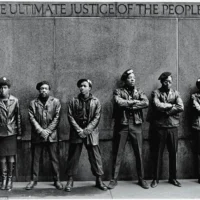
Share
Black Lives Matter, sometimes shortened to “BLM,” is an anti-racist movement that highlights racism and the disparities that evolve from racism, including police brutality and other anti-Black violence. Black Lives Matter gained popularity online after the murder of George Floyd by a Minneapolis police officer was recorded and shared by a bystander. In response to the video, which shows officer Derek Chauvin kneeling on Floyd’s neck for 8 minutes and 46 seconds, protests erupted around the world. These protests were often met with police violence, some of which has been declared illegal while protestors have been falsely arrested.
The momentum continued to draw attention to police violence, both as more Black lives were taken and as previous stories came to light. Trayvon Martin, Michael Brown, Eric Garner, and Breonna Taylor are also victims who the movement has recognized. Thanks to the attention given to these cases, some of the perpetrators have finally faced justice, including Derek Chauvin, who has been convicted with murder.
BLM also encouraged police reform and greater investigations into policing, with some activists calling for reparations or to defund the police and reroute funds to other social programs that may be more effective. The movement has further brought attention to international conflict and raised funds during the COVID-19 pandemic. In some ways, the movement reflects the previous Civil Rights Movement, which lasted through the 1960s to 1980s including the Black Panther Party, which provided community assistance. Because of this, the movement has been recognized for its historical significance.
However, the movement has come under fire for protests that turned violent, for focusing too much on Black men, and for mismanaging funds raised.
A nonprofit organization, The Black Lives Matter Global Network Foundation, also exists. Some people may refer to it as simply “Black Lives Matter.”
See all of our Black Lives Matter content below, starting with the most recent.
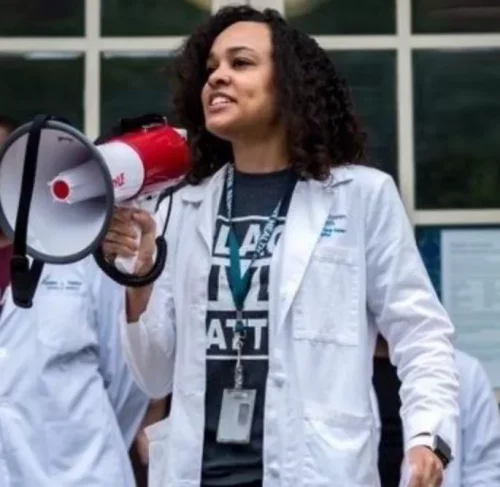
When Dr. Amanda Calhoun spoke of her experience with racism as a black woman and doctor, she received pushback–and death threats.
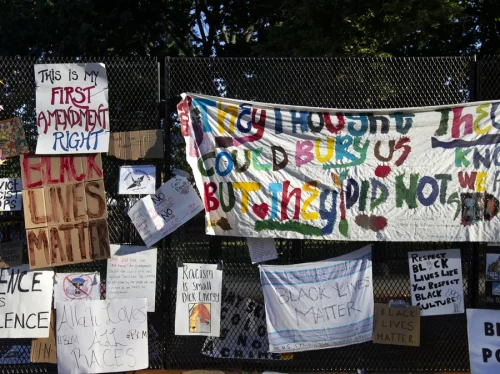
For months after the 2020 Black Lives Matter protest in Washington DC, signs and posters hung near the White House. The Library of Congress has now added images of some of these works to a digital collection.
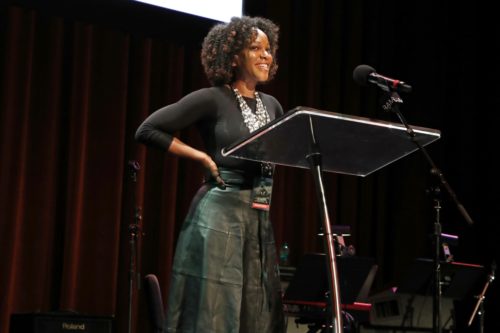
By Elaina Patton, NBC News In her new book, “South to America: A Journey Below the Mason-Dixon to Understand the Soul of a Nation,” Imani Perry engages with the long literary tradition of writing about one’s travels through the South. Joining writers such as Albert Murray, James Baldwin and V.S. Naipaul, the Alabama native charts the well-worn path into the belly of the country’s most storied region. Along the way, she shines a light on some of the area’s overlooked and willfully buried stories, writing from the perspective of a student of Southern history and literature, while crafting a deeply personal narrative about going home. “History can’t tell everything, ever. So the choices are always political,” Perry told NBC News. “I’m not telling people the whole history of the South. It’s an invitation to consider that, maybe, the [historical] frameworks, or even the battles that we’re having over the frameworks, are not sufficient.” Perry, a professor of African American studies at Princeton University, spent five years visiting the locations from the Upper South to the Caribbean that are highlighted in the chapters of “South to America.” Until the pandemic hit, she was often driving from place to place. Later, when movement was limited, she found that she could pull on memories from a lifetime of traveling around the South to enrich her accounts. Read the full article here. More Breaking News here.
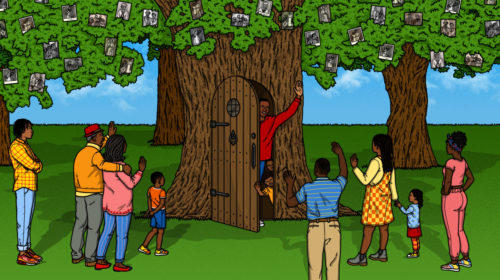
By Curtis Bunn, NBC News Black people have been able to connect with the past and give new agency to their identities through building family trees and researching their family histories. Growing up in Philadelphia, Amber Jackson said she knew so little of her history that she felt disconnected from who she was. “They didn’t teach you the history of Black people in school,” she said. “They kind of gave you the illusion that Black people just showed up after everything was put together.” Attempts to learn about her family history from older relatives were futile, she said. “I could see the hurt in their faces. They didn’t want to talk about it,” Jackson said. “So, I let it go.” Then she saw the 2002 movie “Antwone Fisher,” about a young sailor who had been in foster care and sought to learn more about his birth family. “And that’s when I was inspired to start my search to find mine, just like he did,” Jackson said. She said she went through the Whitepages, as actor Derrick Luke had in the movie, and located her father’s sister almost instantly and called her, which led to more relatives. The findings inspired her to learn more, and Jackson pressed on, spending hours that turned into years building out her family tree through searching archives in libraries and research centers, scanning microfilm and, as technology advanced, using online services. In 2021, after 19 years of probing, she struck Black family tree gold: an ancestral connection to the legendary abolitionist Harriet Tubman. Jackson learned that her great-great-grandmother was Jeanette Cornish, whose grandfather was Aaron Cornish, born in 1822 in Cambridge, Maryland — the same town as Tubman. At 17, Aaron Cornish was among the 28 enslaved people Tubman led from the plantation on which they were kept. They would later be called the Cambridge 28, famous for the size of the group that escaped to freedom while carrying weapons to defend themselves, if necessary, and enduring three days of torrential rain. The revelation elevated her self-esteem, she said, giving her a sense of self that had previously been absent. “First, I felt pride bursting out of every pore,” she said. “Then, when I reread their story and what they went through, the emotion changed to an overwhelming hurt and sympathy for my family, imagining what my great-grandmother, Daffney, had to endure, giving birth during the escape and having enough faith and intestinal fortitude to push forward for not just her and her husband but her children. I am blown away by their strength.” Jackson’s story underscores the surge in Black people using various means to increase their connection to family members who came before them as a way of bolstering their identity. The discovery of bloodlines generates a sense of self that can be profound — and can even alter how Black people look at themselves, Jackson said. “Remember, Black families were separated purposefully to delete and separate any sort of throughline, any sort of emotional…
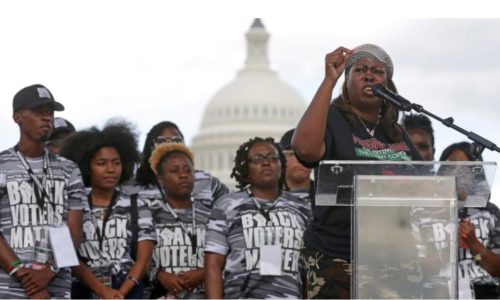
By Jessica Floyd, The Grio EXCLUSIVE: Voting rights advocates connect Capitol attack to racial riots throughout history that sought a common goal to strike fear in Black voters and anyone who validated their political power. LaTosha Brown, co-founder of Black Voters Matter received a call from the Federal Bureau of Investigations on Jan. 6, 2021 notifying her of credible threats against her life. She evacuated her home in Georgia that day. Miles away in Washington, D.C., federal lawmakers took cover and hid from an assault on the U.S. Capitol building. “[My co-founder] Cliff and I had to move our families from our homes and go stay at safe houses for 10 days,” Brown exclusively told theGrio. “On January 6, you know, not only were we witnessing an attack on the Capitol, we were also dealing with the fact of our own safety issues.” Brown and other voting rights advocates pin the violence that unfolded on Jan. 6 on white supremacists. Additionally, the proponents of voting rights connect the riot at the Capitol to racial riots throughout history that sought a common goal: to strike fear in Black voters and anyone who validated their political power. Read the full article here. Learn more about the January 6, 2021 Capitol building riot here and here. More Breaking News here.
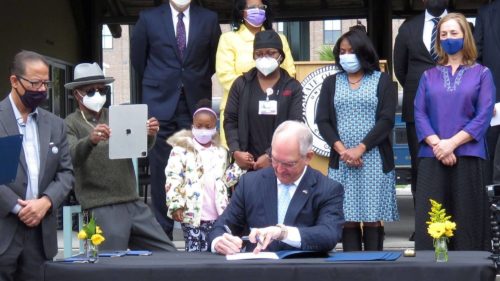
By BET staff, BET News The landmark 1896 case solidified Jim Crow. Louisiana Governor John Bel Edwards has pardoned Homer Adolph Plessy, of the 1896 Plessy v. Ferguson ruling. According to CBS, Edwards signed the pardon during a ceremony outside the former rail station in New Orleans where Plessy was arrested 130 years ago for sitting in a white area of the train. On June 7, 1892, the shoemaker from the Tremé neighborhood in New Orleans bought a first-class railroad ticket in the white car to travel to Covington, Louisiana. Homer Adolph Plessy, who was seven-eighths white, was legally considered to be “colored.” When asked to leave the white car, the then 30-year-old was arrested and charged with violating Louisiana’s Separate Car Act of 1890. It was, however, a pre-planned act of civil disobedience that led to the historic Supreme Court decision Plessy v. Ferguson, which upheld the “separate but equal” Jim Crow doctrine from 1896, until it was overturned by the Brown v. Board of Education ruling in 1954. Plessy died March 1, 1925 with that conviction still on his record. Read the full article here. Learn more about Plessy vs. Furguson here. More Breaking News here.
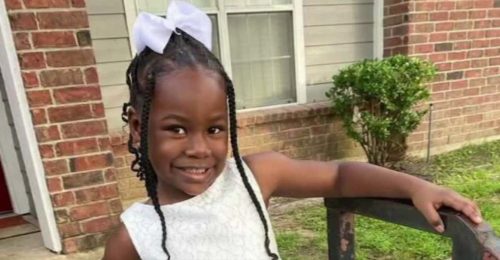
By Noah A. McGee, The Root.com Houston Police took four hours to arrive at the scene of the shooting. A shooting that occurred on New Year’s Day in Houston, Texas injured a 4-year-old girl, Arianna Delane, while she was sleeping. The girl turned out to be the niece of George Floyd, who was killed last year after a Minnesota Police Officer put his knee on Floyd’s neck, according to ABC13. Now, the Houston Police Department is launching an internal probe after it took officers four hours to arrive at the scene of the shooting. Four hours?! Per the story from ABC13, Arianna’s father, Derrick Delane, said that their apartment was hit multiple times by gunfire around 3 a.m. on New Year’s Day and the gunfire that went into the second story of their apartment hit Arianna who was sleeping. Thankfully, she survived the shooting. Read the full article here. Learn more about the murder of George Floyd here and here. More Breaking News here.
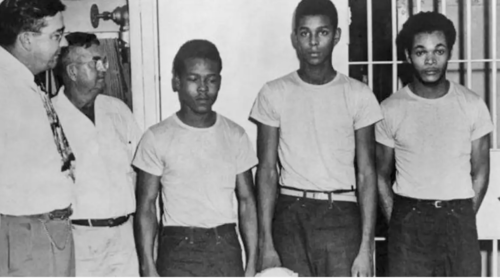
By Noah A. McGee, The Root.com Experts explain why we ‘re seeing so many high-profile exonerations of Black people in the United States during the last few decades. In 2021, a total of 132 people received exonerations: 81 of them were Black. Just a decade ago in 2011, only 40 Black people were exonerated. Since 1989 there’s been a 1,057 percent increase in the number of Black people released from prison because they were wrongfully convicted. Of the high-profile exonerations in 2021, the Groveland Four (a group of Black men convicted of kidnapping and raping a White teenager in 1949, including Kevin Strickland, Anthony Broadwater and Muhammad A. Aziz) were among the most celebrated. Are these high-profile exonerations a coincidence? Is it because innocence organizations have more resources? Did the aftermath of George Floyd contribute? Dr. Yohuru Williams, founding Director of the Racial Justice Initiative at the University of St. Thomas says all of the above. “It’s definitely not a coincidence. In fact, I would argue that it’s a trend that has developed and accelerated post the murder of George Floyd.” He acknowledges that many of these cases were already being discussed and there was pressure on officials in cases like the Groveland Four and the accused shooters of Malcolm X. According to Williams, “the Floyd case accelerated this reckoning with problems in our criminal justice system that have led to and perpetuated these wrongful convictions of men of color, in particular, African American men. It put some real fire behind getting what most people would call ‘essential justice.’ That’s the idea that justice was denied in the moment, but in correcting the record, you are, in some sense, righting that wrong, at least in terms of the state recognizing officially that these individuals were, in fact, not guilty.” Read the full article here. More Breaking News here.
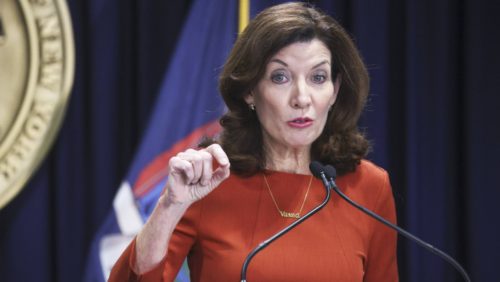
By Joshua Eferighe, BET News The declaration is to combat discrimination and racism in New York’s healthcare system. Racism is now a public health crisis in New York. The declaration is a part of a series of measures signed last week (December 23) by Governor Kathy Hochul in an effort to address the inequities in New York’s healthcare system, which have been magnified during the pandemic. On Dec. 5th, the New York City Police Department released data that found that hate crimes were up 100% year-over-year, including a 361% increase in anti-Asian hate crime incidents. One of the measures that were signed addresses the medical biases impacting newborns and their mothers of color, where the maternal mortality rate for Black mothers is the highest rate in the U.S. According to studies, Black mothers are eight times more likely to die from a pregnancy-related cause than white mothers. In addition, Hochul presented a bill to redefine hate crimes with the goal to reform the process in which law enforcement collects and reports the demographic data of hate crime victims and perpetrators. The bill also requires certain state organizations to report their demographic data specifically with regards to Asian Americans and Pacific Islanders. Another measure that was signed also mandates that the New York State Office of Technology Services are to help state agencies improve their language translation technology. With more than 700 languages and dialects spoken in New York City, the lack of language translation services has impacted residents’ abilities to vote and protect themselves against Covid-19. Read the full article here. More Breaking News here.
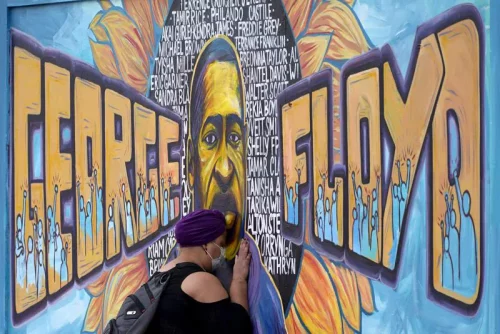
By Associated Press, via The Grio Gov. Greg Abbott has yet to decide if he will issue the posthumous pardon. Doling out pardons is a holiday tradition for Texas Gov. Greg Abbott, who around every Christmas grants them to a handful of ordinary citizens, typically for minor offenses committed years or decades ago. But one name stands out on his desk: George Floyd. Abbott has not said whether he will posthumously pardon Floyd this year for a 2004 drug arrest in Houston by a former officer whose police work is no longer trusted by prosecutors. Texas’ parole board – stacked with Abbott appointees – unanimously recommended a pardon for Floyd in October. Since then, the two-term Republican governor, who is up for reelection in 2022, has given no indication of whether he will grant what would be only the second posthumous pardon in Texas history. Floyd, who was Black, spent much of his life in Houston before moving to Minnesota, where his death under the knee of a white police officer last year led to a U.S. reckoning on race and policing. Read the full article here. Learn more about changes since George Floyd’s death here. More Breaking News here.