Black History: October 7th 1954
Share
Explore Our Galleries









Breaking News!
Today's news and culture by Black and other reporters in the Black and mainstream media.
Ways to Support ABHM?
By HuffingtonPost
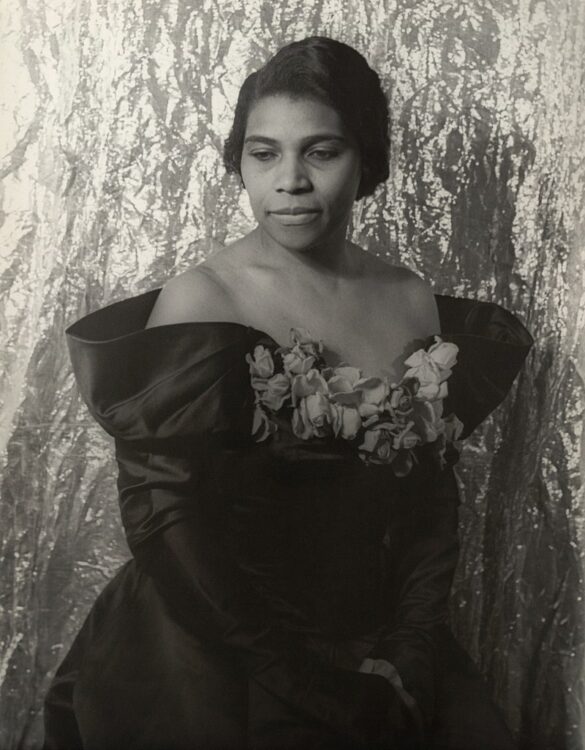
(October 7th) in 1954, the New York Metropolitan Opera hired Marian Anderson making her the first black singer that the famed opera house signed on. Anderson would make her debut performance with the company three months later, on January 7, 1955.
Before the big hire, Anderson made a name for herself performing at venues like Carnegie Hall. However, she did encounter barriers and discrimination because of her race. In 1939, the manager of Washington, D.C.’s Constitution Hall did not allow her to perform. When the public got word that this was due to Anderson’s race, first lady Eleanor Roosevelt spoke out against it. The Roosevelt’s later invited Anderson to perform at the Lincoln Memorial on Easter Sunday of that year, in front of a crowd of 75,000.
Marian Anderson [was] the first African American soloist ever to perform at the Metropolitan Opera House, sings “Ave Maria” on the stage of Carnegie Hall, in what was billed as her farewell performance, April 18, 1965.
To read the full article, click here.
For more breaking news, click here.
Comments Are Welcome
Note: We moderate submissions in order to create a space for meaningful dialogue, a space where museum visitors – adults and youth –– can exchange informed, thoughtful, and relevant comments that add value to our exhibits.
Racial slurs, personal attacks, obscenity, profanity, and SHOUTING do not meet the above standard. Such comments are posted in the exhibit Hateful Speech. Commercial promotions, impersonations, and incoherent comments likewise fail to meet our goals, so will not be posted. Submissions longer than 120 words will be shortened.
See our full Comments Policy here.