Angola’s slavery museum confronts the darkest horrors of the trade — and honors those who fought back
Share
Explore Our Galleries









Breaking News!
Today's news and culture by Black and other reporters in the Black and mainstream media.
Ways to Support ABHM?
By Griffin Shea, CNN Travel
_(cropped).jpg)
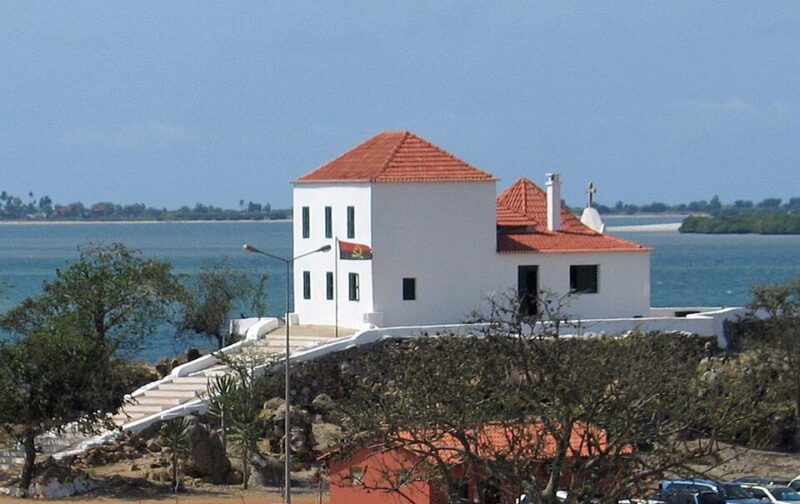
On the outskirts of Luanda, in a centuries-old white house on a hill, a small museum documents one of the greatest horrors of human history. Luanda, the Angolan capital, was the epicenter of the Atlantic slave trade. Now its National Museum of Slavery is working to become a place where the descendants of slaves can return — not only to learn about the history, but to dig into archives that might help trace their ancestry.
The Museu Nacional da Escravatura (National Museum of Slavery) sits on the site of the one-time estate of Álvaro de Carvalho Matoso, a Portuguese man who enslaved so many people that he’s said to have won a commendation for it.
From the 1400s through 1867, an estimated 12.5 million people were enslaved across Africa and transported across the Atlantic. Researchers believe that nearly half — about 45% — came from the region around modern Angola.
At least 1.6 million were forcibly shipped from Luanda, taken mainly to Brazil. But the first slaves to arrive in Britain’s American colonies in 1619 also came from Angola. Registers reproduced on the walls of the museum show enslaved people dispatched not only to what would become Southern states, but also to places like New York and Rhode Island.
A handful of slavery museums ring the African coast, from Senegal to Ghana, down to South Africa and up to Tanzania. Like most of the others, the Luanda museum was once a prison for enslaved Africans, perched on a cliff overlooking the sea — a point of no return designed around imposing geography to prevent any chance of escape.
Today, the oceanfront side of the museum is as stark as it would have been centuries ago. The other side is no longer a colonial estate, but a large paved parking lot for tour buses, with a craft market and a helipad for VIP visitors.
But what’s particularly jarring about the Luanda museum is that part of it is housed in what was once a Catholic chapel on de Carvalho’s former estate. Relics of that time are on display, notably the wooden crucifix and a baptismal font. The font was a tool for the Portuguese colonizers to strip away the identities of enslaved Angolans, by forcibly baptizing them before placing them on ships to cross the Atlantic.
The original article has more details.
Learn more without leaving your home: Nearly Three Centuries Of Enslavement
Comments Are Welcome
Note: We moderate submissions in order to create a space for meaningful dialogue, a space where museum visitors – adults and youth –– can exchange informed, thoughtful, and relevant comments that add value to our exhibits.
Racial slurs, personal attacks, obscenity, profanity, and SHOUTING do not meet the above standard. Such comments are posted in the exhibit Hateful Speech. Commercial promotions, impersonations, and incoherent comments likewise fail to meet our goals, so will not be posted. Submissions longer than 120 words will be shortened.
See our full Comments Policy here.