America Has Finally Found Its ‘Perfect Victim’ Of A Police Shooting
Share
Explore Our Galleries









Breaking News!
Today's news and culture by Black and other reporters in the Black and mainstream media.
Ways to Support ABHM?
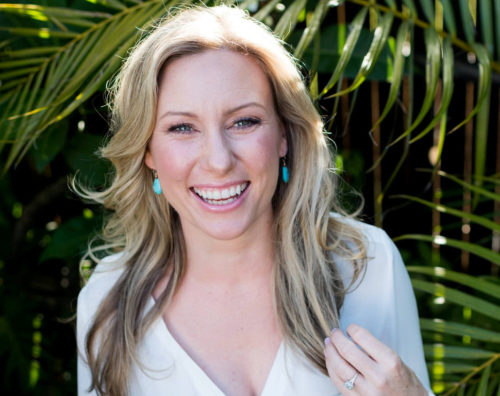
Justine Damond, also known as Justine Ruszczyk, from Sydney, is seen in this 2015 photo released by Stephen Govel Photography in New York, U.S., on July 17, 2017. Courtesy Stephen Govel/Stephen Govel Photography/Handout via REUTERS
How did police end up fatally shooting a blonde, 40-year-old yoga teacher from Australia, as she stood in her pajamas outside her home in an affluent, predominantly white Minneapolis neighborhood?
That question has been focal point since Minneapolis Police Officer Mohamed Noor killed Justine Damond on July 15, after she called to report a possible sexual assault near her home. It’s not clear what happened between the time Damond called 911 and when the officers arrived. Officer Matthew Harrity, Noor’s partner, says he heard a loud noise before Noor fired a single shot into Damond’s stomach from the passenger seat of the police cruiser….
Many of the questions surrounding Damond’s death look familiar, because they’ve been asked before in the wake of numerous high-profile shootings, often involving black civilians. But the near-universal demand for answers, driven by a shared sense of outrage and shock across the political divide over Damond’s death, is not. Something is different about Damond.
Robert Bennett, the Minneapolis lawyer hired to represent Damond’s family, unintentionally touched on the well-known concept of a “perfect” victim in an interview earlier this month, when he referred to Damond in an off-the-cuff remark as “the most innocent victim” of any police shooting he’s heard of….
“I don’t remember any reporter, any headlines, any news stories announcing or identifying Philando Castile in terms of his marital status the way that they immediately have been identifying Justine Damond by her marital status,” Brentin Mock, a writer for CityLab, told WBEZ, a Chicago NPR affiliate.
“It’s almost to suggest that, yes, there should be some extra sympathy — some extra empathy — for the killing of this white woman because she was about to get married,” he continued. “But there was no such sympathy extended to Mr. Castile, an African-American, despite that he was about to get married.”…
Oftentimes after a police shooting, law enforcement, the media and suspicious public opinion work together to shift the liability for police shootings onto the victim ― at least whenever the victim is black. Shooting victim, Tamir Rice’s “size made him look much older,” evn though he was only 12 years old. Freddie Gray was “intentionally trying to injure himself,” even though he was even though he was handcuffed and not seat-belted in the back of a moving police van. Rekia Boyd, 22, made the officer who shot her “feel threatened,” even as he was walking away….
It seems many of Damond’s family, friends and neighbors have come together with the realization that America needs to make drastic changes to its policing system. But the response from those who have traditionally stood behind the violence of police officers and eagerly demonized their victims suggests this outrage and empathy may continue to be selective to only the “most innocent” or “perfect” victims.
Comments Are Welcome
Note: We moderate submissions in order to create a space for meaningful dialogue, a space where museum visitors – adults and youth –– can exchange informed, thoughtful, and relevant comments that add value to our exhibits.
Racial slurs, personal attacks, obscenity, profanity, and SHOUTING do not meet the above standard. Such comments are posted in the exhibit Hateful Speech. Commercial promotions, impersonations, and incoherent comments likewise fail to meet our goals, so will not be posted. Submissions longer than 120 words will be shortened.
See our full Comments Policy here.