After the UVA Mass Shooting, a Renewed Call for Gun Control
Share
Explore Our Galleries









Breaking News!
Today's news and culture by Black and other reporters in the Black and mainstream media.
Ways to Support ABHM?
By Aziah Siid, Word in Black
Parents, students, and activists say stricter gun laws are needed after the killing of Lavel Davis Jr, Devin Chandler, and D’Sean Perry.
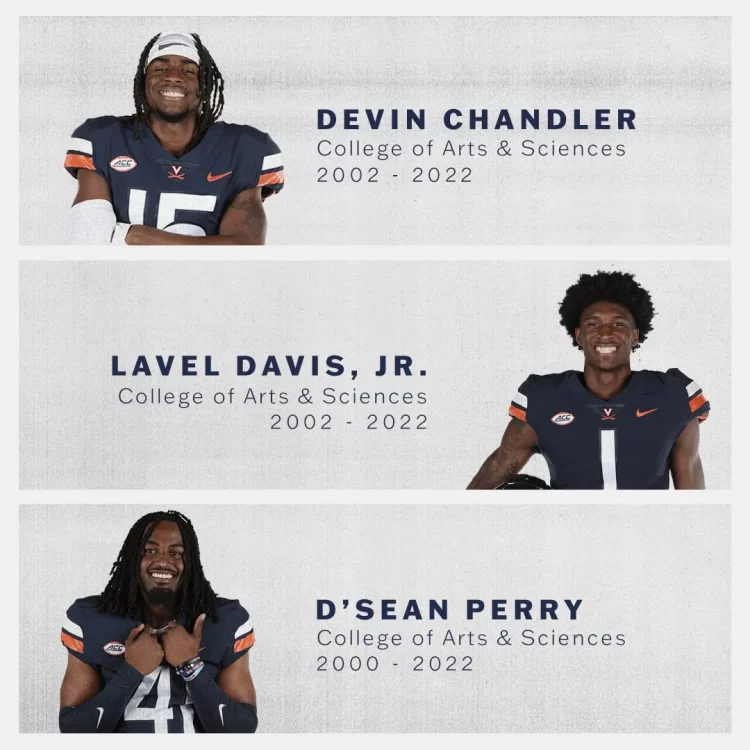
Head to the University of Virginia’s athletics website, and the pearly white smiles of three football players — Lavel Davis Jr., 20; Devin Chandler, 20; and D’Sean Perry, 22 — killed in a shooting Sunday evening — shine on the site’s front page.
Classes were canceled on Monday and Tuesday as the university’s community worked through the grief and emotional toll of the horrific shooting. And in a statement, Virginia Head Football Coach Tony Elliott said that the three “were incredible young men with huge aspirations and extremely bright futures.”
How did those futures get snuffed out? 22-year-old fellow student Christopher Darnell Jones Jr was able to get his hands on a gun.
UVA police chief Timothy Longo admitted in a press conference that the university’s multi-disciplinary threat assessment team received information in September that Jones had a gun on campus.
Jones was arrested on Monday morning and charged with three charges of second-degree murder and three counts of using a handgun in the commission of a felony.
Now, in the aftermath of the shooting, Virginia’s Republican Governor Glenn Youngkin and other policymakers are facing renewed calls for stricter gun laws.
[…]
“We don’t have to accept this sad reality that nowhere is safe from gun violence,” Shannon Watts, founder of the grassroots organization Moms Demand Action said in a statement. ”We must continue to demand action from our elected leaders so we can prevent senseless violence and help save lives.”
Dr. Bernice King, CEO of The King Center, said the spiral of violence is impacting the next generation more than any other demographic, and “we cannot live with gun violence.”
In 2022, there were at least 152 incidents of gunfire on school grounds, with over 300 shootings on grounds of a college or university since 2013.
Virginia’s governor received flack for his response.
Surviving gun violence is incredibly traumatic.
We often cover gun violence in our breaking news archive.
Comments Are Welcome
Note: We moderate submissions in order to create a space for meaningful dialogue, a space where museum visitors – adults and youth –– can exchange informed, thoughtful, and relevant comments that add value to our exhibits.
Racial slurs, personal attacks, obscenity, profanity, and SHOUTING do not meet the above standard. Such comments are posted in the exhibit Hateful Speech. Commercial promotions, impersonations, and incoherent comments likewise fail to meet our goals, so will not be posted. Submissions longer than 120 words will be shortened.
See our full Comments Policy here.