[ABHM] Lecture series asks ‘Do Black Lives Matter?’
Share
Explore Our Galleries









Breaking News!
Today's news and culture by Black and other reporters in the Black and mainstream media.
Ways to Support ABHM?
By
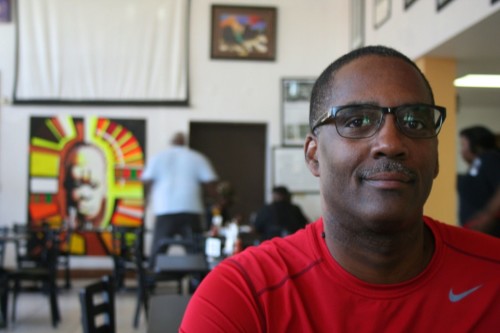
[Editor’s Note: ABHM’s Head Griot, Reggie Jackson, will present his #Do Black Lives Matter? lecture series at Milwaukee’s Villard Square Library on August 3, 5, 10, and 12, 2015 – 5:30-7:30pm. To arrange for a presentation on this or similar topics by Mr. Jackson or another ABHM griot, please contact us here.]
…[This] series addresses the 400-year-long history of black people in America, starting in 1619 when the first Africans were brought to the British colonies….
“There’s been a … consistency in the way blacks have been devalued,” Jackson said in an interview. “We don’t study our history in-depth enough to realize it. We don’t talk about these things because they’re ugly things to talk about.”
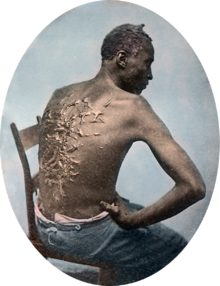
…Slavery “set the foundation” for the devaluation of black lives that Jackson said continues today in America….“You’re in this situation where, from day to day, generation after generation, you are debased as a human being,” he said, adding that an 1811 manual on “how to control your slaves” mentally and physically recommended that “you debase them in such a way that they begin to accept their condition.”
Jackson said, as slaves, black men weren’t able to protect their families and it was against the law in every state to teach blacks to read and write. “You begin to have a … lack of self-worth — you don’t value yourself, you don’t value people who look like you,” said Jackson. “And, this is part of the mindset that continues even after slavery ends.”
[…]
“In order for you to enslave millions and millions of people over several centuries, you have to develop a mindset where you don’t value their lives. You can’t have a situation where you look at them as your equals and treat them the way that these people are treated,” Jackson said.
[…]

“If you go in thinking that blacks are inferior to whites … you’re going to prove that that’s true,” Jackson said, adding that… flawed [scientific] research was accepted and “became the lasting justification for devaluing black lives in America.”
These pseudo-scientific justifications for black inferiority allowed for scientific and medical experiments to be perpetrated on black people by pharmaceutical companies, prisons and the United States government. The continued devaluation also resulted in the perpetuation of caricatures that promoted blacks as lazy, unintelligent and inarticulate.
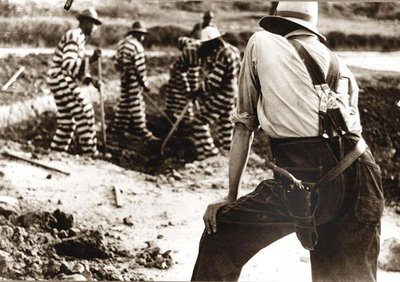
“That’s part of the psychology that allowed this mass incarceration to occur,” said Jackson, referring to the fact that about 40 percent of America’s 2.3 million prisoners are black, despite being 13 percent of the population. “We criminalize blacks in the minds of America and, so, we have no problem throwing a million of them in prison, and throwing away the key and not really caring.”
“It has to have this debilitating impact on you, mentally,” Jackson said. “You have to begin to believe that you deserve this.”
Under such conditions, “it becomes very difficult to have a positive view of who you are as a person,” Jackson said. The emergence of the black power movement, Black Panther Party and the civil rights movement changed some of that perception but much of the momentum that had been built dissipated with the advent of the Vietnam War, the assassination of Martin Luther King Jr. and COINTELPRO, an FBI program that aimed to discredit King and infiltrate domestic political organizations such as those fighting for black civil rights.
[…]
Though Jackson isn’t sure whether America is ready to have an honest conversation about the value of black lives, he hopes that providing information and context will inspire people to “challenge the system we live in.”
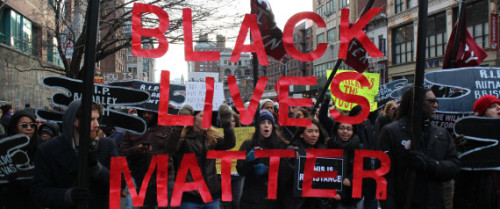
[Jessica MacPhail, Director of the Racine Public Library, who hosted this series in July 2015] said the power of his presentation is that people get a perspective they might not have thought about before. “Once you’ve heard the truth, once you’ve seen something that changes how you think about something or how you feel about something, you can’t go back and un-see it, you can’t go back to being the person you were before,” she said….
Jackson agreed. “We can’t just say ‘black lives matter’ and just leave it at that. We have to question whether or not it’s really true,” he said. “Because if you just assume that they do then there’s no problem, there’s nothing to fix.”
For the full story, click here.
For more Breaking News, click here.
Comments Are Welcome
Note: We moderate submissions in order to create a space for meaningful dialogue, a space where museum visitors – adults and youth –– can exchange informed, thoughtful, and relevant comments that add value to our exhibits.
Racial slurs, personal attacks, obscenity, profanity, and SHOUTING do not meet the above standard. Such comments are posted in the exhibit Hateful Speech. Commercial promotions, impersonations, and incoherent comments likewise fail to meet our goals, so will not be posted. Submissions longer than 120 words will be shortened.
See our full Comments Policy here.