A Rare, Firsthand Account of an African Muslim Enslaved in Brazil
Share
Explore Our Galleries









Breaking News!
Today's news and culture by Black and other reporters in the Black and mainstream media.
Ways to Support ABHM?
By Steven J. Niven, The Root
Captured and stolen from Benin, Mahommah Gardo Baquaqua eventually found freedom in the United States, but he always dreamed of his African home.
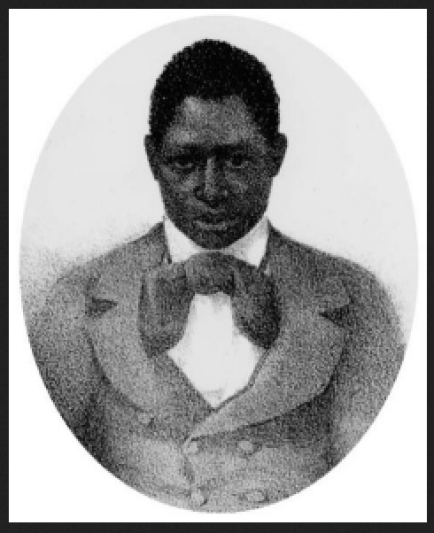
There are relatively few detailed, firsthand accounts of the 12 million Africans captured and forcibly transported to the Americas in the 400 years of the trans-Atlantic slave trade. Of the 10 million survivors of that journey, only a very small number, like Olaudah Equiano and Venture Smith lived long enough—or had the time or opportunity—to write about their experiences. Others like Job Ben Solomon were the subjects of biographies during their lifetimes.
To date, though, we know of only one African who wrote an account of his capture and enslavementin Brazil, the destination for 40 percent of all slaves who made that perilous Atlantic crossing between 1519 and 1867, when the slave trade finally ended in fact as well as in law.
For that reason alone, Mahommah Gardo Baquaqua’s Biography and description of the notorious Middle Passage would be worth exploring. But Baquaqua’s 1854 narrative also reveals a remarkable journey that took him to Haiti, upstate New York, Canada and England. In these places he was legally free but not at peace, because he was not at home. According to the Irish abolitionist Samuel Moore, who assisted him in writing and publishing his work, Baquaqua talked “much of Africa” and prayed ardently that he would one day return.
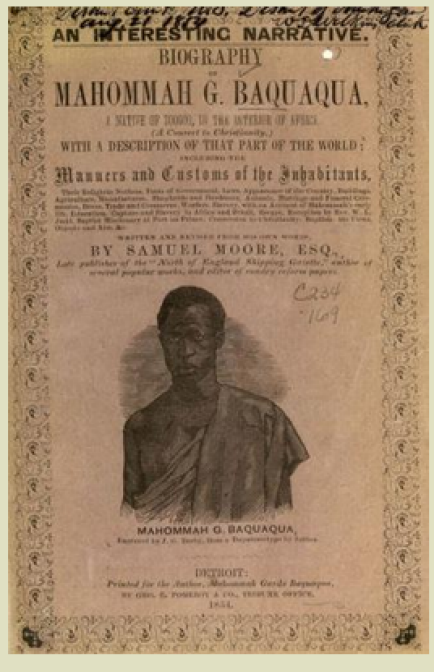
Home, according to Baquaqua’s Biography, was the city of Zoogoo, now known as Djougou, a large city in the interior of the present-day West African nation of Benin. The Bight of Benin was one of the major ports of slave departures, responsible for the transportation of over 2 million Africans to the Western Hemisphere—a quarter of them, like Baquaqua, after the official ending of the slave trade in 1807.
As his first name, “Mahommah,” indicates, he was born a Muslim. His father, a Nigerian-born merchant, was “not very dark complexioned,” according to his description, and was said to be of “Arabian” descent. His mother, “entirely black,” came from Katsina in northern Nigeria, which was on a major caravan trade route in West Africa. Exactly how or why she traversed the 700 miles from Katsina to Djougou, where her husband made his home, is a reminder that 19th-century Africa was a very mobile society, shaped not only by the slave trade but by internal changes as well…
Read the full article here.
Read more Breaking News here.
Comments Are Welcome
Note: We moderate submissions in order to create a space for meaningful dialogue, a space where museum visitors – adults and youth –– can exchange informed, thoughtful, and relevant comments that add value to our exhibits.
Racial slurs, personal attacks, obscenity, profanity, and SHOUTING do not meet the above standard. Such comments are posted in the exhibit Hateful Speech. Commercial promotions, impersonations, and incoherent comments likewise fail to meet our goals, so will not be posted. Submissions longer than 120 words will be shortened.
See our full Comments Policy here.