Barn Where White Men Murdered Emmett Till to Be Preserved as a ‘Reverent, Sacred Site’
Share
Explore Our Galleries









Breaking News!
Today's news and culture by Black and other reporters in the Black and mainstream media.
Ways to Support ABHM?
Jaylin R. Smith, Mississippi Free Press
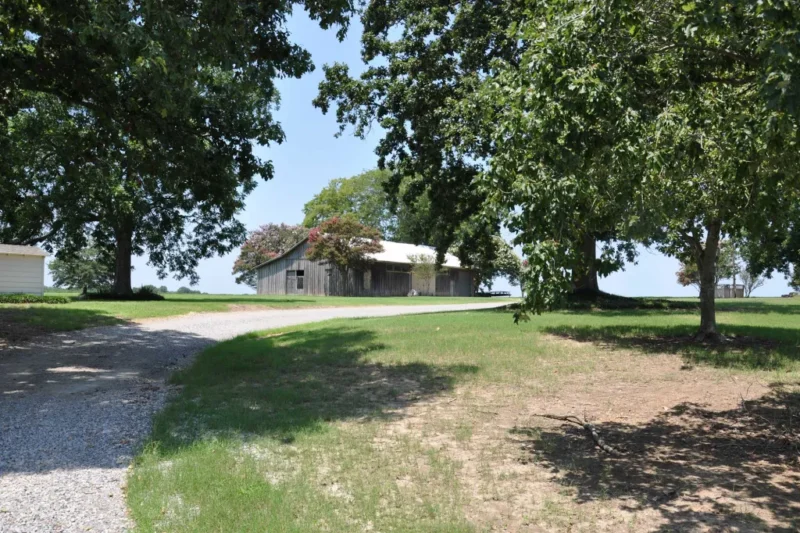
DREW, Miss.—It was only 70 years ago. A green and white ‘55 Chevrolet pickup truck trudged across a dark, gravel road, carrying a young Black boy and his two white captors to a barn in Drew, Mississippi.
It was only 70 years ago. The walls of the old, tattered barn bore witness as the white men battered the body and broke the bones of a young Black boy who had the audacity to live, to exist in a society hell-bent on his demise.
It was only 70 years ago. The barn floor held the body of the 14-year-old Black child as he cried out for his mother under the weight of J.W. Milam and Roy Bryant’s hateful hands. A bullet blasted out of a pistol into the young Black body that had already endured a brutal beating. After two hours of torture for the sin of allegedly whistling at Bryant’s white wife at a grocery store in Money, Miss., Emmett Louis Till died in the barn. His death, and Bryant and Milam’s acquittal by an all-white jury, would galvanize the Civil Rights Movement.
Now, an organization devoted to preserving the legacy and memory of Till has taken ownership of the barn and plans to open it as a public memorial by 2030. The Emmett Till Interpretive Center announced in an open letter that the organization had purchased the building from Jeff Andrews, a white dentist who purchased the property in the 1990s.
Learn how the organization was able to purchase the property.
Till was just one of many victims of lynching.
Comments Are Welcome
Note: We moderate submissions in order to create a space for meaningful dialogue, a space where museum visitors – adults and youth –– can exchange informed, thoughtful, and relevant comments that add value to our exhibits.
Racial slurs, personal attacks, obscenity, profanity, and SHOUTING do not meet the above standard. Such comments are posted in the exhibit Hateful Speech. Commercial promotions, impersonations, and incoherent comments likewise fail to meet our goals, so will not be posted. Submissions longer than 120 words will be shortened.
See our full Comments Policy here.