In New Orleans, Essence Fest Is a Celebration — but Not Always for Black Locals
Share
Explore Our Galleries









Breaking News!
Today's news and culture by Black and other reporters in the Black and mainstream media.
Ways to Support ABHM?
By Adam Mahoney, Capital B
After Hurricane Katrina, the city rebuilt its economy around tourism. Black residents, whose culture powers the city, see little of the profits.
On the first night of Essence Fest, Paper Machine, an artist space in New Orleans’ Lower Ninth Ward, came alive with creativity and community. Inside a sunlit room, Lauryn Hinton gathered neighbors around long tables scattered with scissors, glossy magazines, and piles of vibrant, textured paper.
Hinton, a 24-year-old Baton Rouge, Louisiana, native who has lived in New Orleans since 2018, organized the space for Black art making to educate residents about the ways collaging has been used in the community dating back to slavery. Laughter and conversation filled the room, as participants — ranging from their early 20s to their 70s — flipped through magazines, searching for images and words that spoke to them.
Art and Black culture, Hinton said, should be about more than commercialization and profits, but rather about reclaiming agency for Black people and building genuine community.
[…]
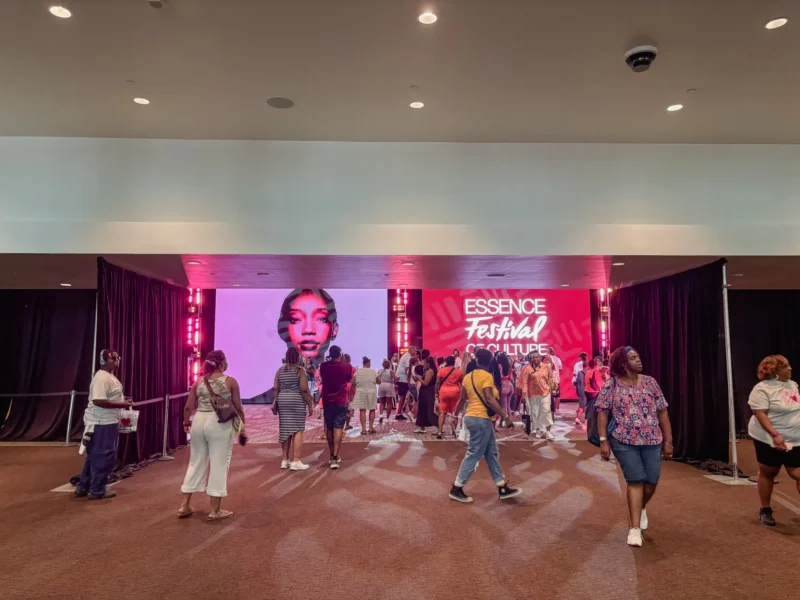
New Orleans is uniquely a city where Black culture is not just celebrated but forms the very backbone of its global identity, and as such, Black tourism, embodied by events like Essence Fest, undeniably brings visibility, pride, and a much-needed economic jolt to the region. It creates jobs, fills hotels, and spotlights Black culture on a global stage. But in a city where the economic structure is built on the labor and creativity of Black residents, the benefits of Black tourism are often captured by large corporations, out-of-town investors, and city coffers — but not by the communities whose culture is being sold.
This year, Essence Fest, which typically draws almost half a million visitors — nearly double the city’s population — and generates $300 million in economic activity, made headlines for a relatively low turnout, which made the trickle-down effect even less strong. Online, some Black people said they were boycotting Essence Fest this year because Target, which has come under fire for ending its diversity, equity, and inclusion initiatives, was one of the festival’s main sponsors.
Capital B has more details.
Stop by our events calendar for similar events or browse our online galleries if you’re not local.
Comments Are Welcome
Note: We moderate submissions in order to create a space for meaningful dialogue, a space where museum visitors – adults and youth –– can exchange informed, thoughtful, and relevant comments that add value to our exhibits.
Racial slurs, personal attacks, obscenity, profanity, and SHOUTING do not meet the above standard. Such comments are posted in the exhibit Hateful Speech. Commercial promotions, impersonations, and incoherent comments likewise fail to meet our goals, so will not be posted. Submissions longer than 120 words will be shortened.
See our full Comments Policy here.