‘Kingdom of No Tomorrow’ was a prizewinner before it was published
Share
Explore Our Galleries









Breaking News!
Today's news and culture by Black and other reporters in the Black and mainstream media.
Ways to Support ABHM?
Ron Charles, The Washington Post
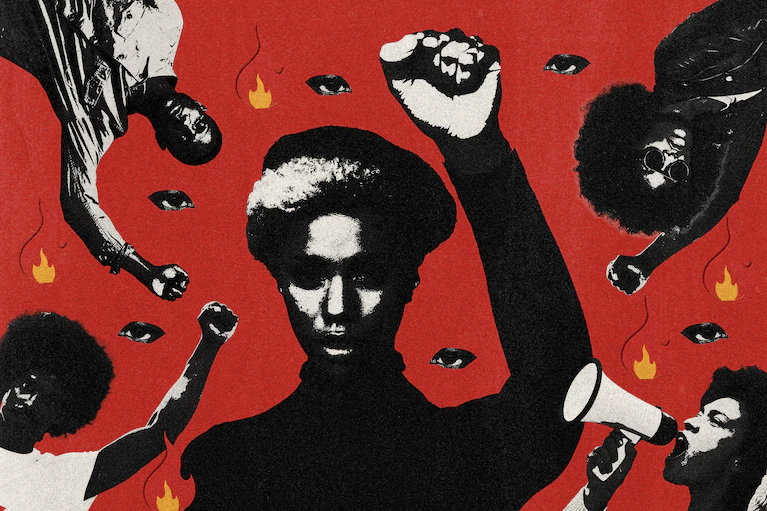
Fabienne Josaphat’s genre-blending novel about members of the Black Panther Party won the Bellwether Prize in 2023.
[…]
“Kingdom of No Tomorrow” which won the Bellwether prize in 2023, was released this month by Algonquin.
[Fabienne Josaphat’s “Kingdom of No Tomorrow,”] is an earnest, urgent novel about a young woman in the Black Panther Party in the late 1960s.
In her acknowledgments, Josaphat notes that she based this story on a number of books about the Black Panthers and interviews with former members. Indeed, for many readers born after the baby boomers, “Kingdom of No Tomorrow” may be their first introduction to the revolutionary organization founded in 1966 by Huey P. Newton and Bobby Seale to protect the lives of African Americans. Fred Hampton, Stokely Carmichael, H. Rap Brown, Eldridge Cleaver and other real-life radicals of the era orbit in the novel’s background, exerting their gravitational pull on the fictional characters in the foreground.
But despite Josaphat’s fidelity to the hopes and clashes of the late 1960s, this is not one of those novels that putters along like an old pickup truck overloaded with historical cargo. Indeed, as you might expect from the Bellwether imprimatur, “Kingdom of No Tomorrow” is a novel looking to the past as a way of engaging with our current social challenges. Considering her inspiration, Josaphat writes, “The constant killings of Black people at the hands of the police had catapulted me into a very deep introspection about history, about power, and about how Black people around the world engaged in struggle to be seen and respected on equal footing.” Consequently, the dramatic story she tells in these pages traces the current fight for justice, safety, health and nutrition back to a moment when groups of African Americans pursued collective actions, while state and federal officials regarded them as Marxist threats and conspired to destroy them.
Finish reading the review here.
Like to read? Check out ABHM’s book club to join this month’s reading of Enslaved, Indentured, Free: Five Black Women on the Upper Mississippi, 1800-1850 by Mary Elise Antoine.
More Breaking News.
Comments Are Welcome
Note: We moderate submissions in order to create a space for meaningful dialogue, a space where museum visitors – adults and youth –– can exchange informed, thoughtful, and relevant comments that add value to our exhibits.
Racial slurs, personal attacks, obscenity, profanity, and SHOUTING do not meet the above standard. Such comments are posted in the exhibit Hateful Speech. Commercial promotions, impersonations, and incoherent comments likewise fail to meet our goals, so will not be posted. Submissions longer than 120 words will be shortened.
See our full Comments Policy here.