A genre that celebrates Black futures is getting its due
Share
Explore Our Galleries









Breaking News!
Today's news and culture by Black and other reporters in the Black and mainstream media.
Ways to Support ABHM?
By Patrice Gaines, NBC
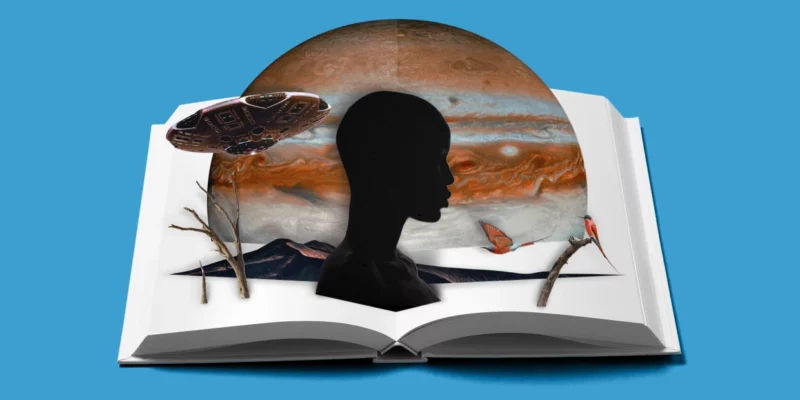
For years the world of Afrofuturism was small.
The genre of Black speculative arts, including literature, film, comics and music, was most dominant in books by authors with cult followings like Steven Barnes and Samuel Delany, as well as Octavia Butler, who is considered the godmother of Afrofuturism.
Their work was chock-full of reality-bending stories about Black people: a slave sorcerer who buys his freedom by showing his master he could live forever; a hyper-empathic young Black woman; the heroine in a story that offers commentary on climate change and social inequality.
“For about 20 years, Octavia and I were probably the only Black people writing science fiction and getting published,” said Barnes, the author of more than 30 books. “It was unspeakably lonely.”
After Butler died in 2006, “it did feel for a while we were scattering apart,” said Tananarive Due, an African American author and screenwriter who teaches Black horror at the University of California, Los Angeles. In fact, Due said, around the same time many independent bookstores that carried Black speculative fiction closed.
But years later, Afrofuturism is resurging. A new exhibit at the National Museum of African American History and Culture titled “Afrofuturism: A History of Black Futures” opens Friday, capturing this pivotal moment for the genre.
NBC News has more about the genre.
Butler’s novel Kindred recently became a TV series, while the science fiction writer that inspired Wakanda has received recognition.
Never miss a Black entertainment article when you follow our breaking news.
Comments Are Welcome
Note: We moderate submissions in order to create a space for meaningful dialogue, a space where museum visitors – adults and youth –– can exchange informed, thoughtful, and relevant comments that add value to our exhibits.
Racial slurs, personal attacks, obscenity, profanity, and SHOUTING do not meet the above standard. Such comments are posted in the exhibit Hateful Speech. Commercial promotions, impersonations, and incoherent comments likewise fail to meet our goals, so will not be posted. Submissions longer than 120 words will be shortened.
See our full Comments Policy here.