The Pioneering Black LGBT Activist You Probably Don’t Know – But Should
Share
Explore Our Galleries









Breaking News!
Today's news and culture by Black and other reporters in the Black and mainstream media.
Ways to Support ABHM?
By Dawn Suggs, Word in Black
Friends from around the country gathered in October with neighbors in New York City’s East Village for the unveiling of the street sign in honor of Donald Suggs Jr., who died a decade ago.
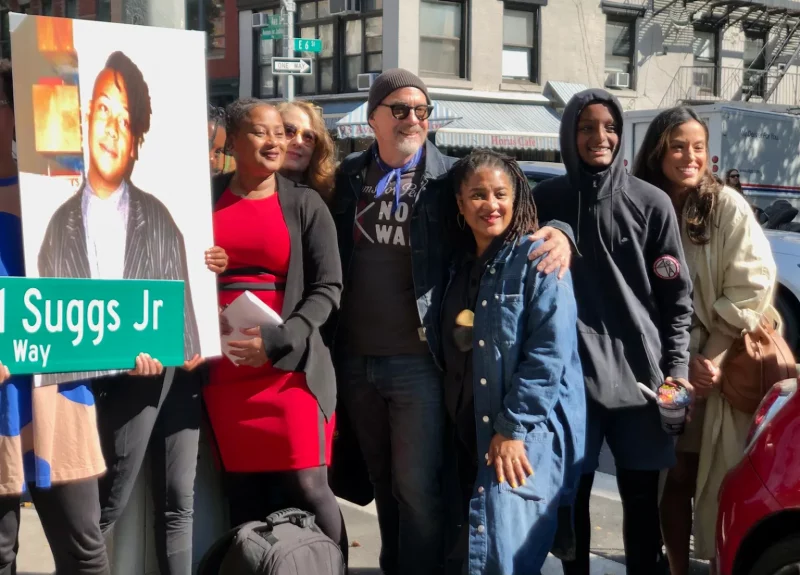
On a bright, crisp morning in October, a crowd of Donald Suggs Jr.’s friends, neighbors, and family from across the country gathered at the southwest corner of East 6th street and Avenue B in New York City’s East Village. In front of a verdant community garden, they witnessed the unveiling of the street sign “Donald Suggs Jr. Way,” 10 years and 10 days after Donald’s death.
As 3rd District council member Carlina Rivera told those gathered: “To his friends and neighbors, he was the mayor of the East Village. He is remembered by many as a tireless activist for LGBTQ+ rights, an influential writer, and a caring friend.”
[…]
I loved Donald because he was my brother, but also because of how much he stood up for who he was and for his community. No doubt, if Donald was still here, he would be using his megaphone as a media activist — and his well-honed platform full-throttle as a journalist and national pundit — to protect, uplift, and empower LGBTQ+ folks of color as courageously and charismatically as he did when he walked the streets of New York.
The recent uptick in anti-LGBTQ rhetoric and laws fans the flames of intolerance and hatred against LGBTQ+ people and fuels the fire of those who wish to harm them, as so tragically born out in the recent mass shooting at Club Q in Colorado Springs, Colorado, which left five people dead and many more injured.
This violence, along with the crisis of Black trans people murdered, Black students being bullied, and “Don’t Say Gay” bills in schools, makes it even more crucial that we honor Black gay activists like Donald who have been through the fire and fought for justice — and that we know their stories and pick up the torch they carried.
[…]
Donald, a Black gay man, who cut a sharp and statuesque sartorial figure, usually dressed in black, can no longer be spotted walking to his home on East 6th Street with his head held high. Dr. Luis Ramirez, who Donald considered his “gay son,” spoke during the street sign unveiling ceremony, “It was just so magical to see him walking,” Luis said while reminiscing about Donald teaching him how to walk down East 6th Street in heels like Naomi Campbell.
Learn more about Suggs, his activism, and the neighborhood he–and other LGBTQ+ folks–called home.
Thanks to early pioneers like Suggs, more queer Black people are speaking up, running for office, pointing out discrimination, and finding support than ever.
More Black culture and identity news stories here.
Comments Are Welcome
Note: We moderate submissions in order to create a space for meaningful dialogue, a space where museum visitors – adults and youth –– can exchange informed, thoughtful, and relevant comments that add value to our exhibits.
Racial slurs, personal attacks, obscenity, profanity, and SHOUTING do not meet the above standard. Such comments are posted in the exhibit Hateful Speech. Commercial promotions, impersonations, and incoherent comments likewise fail to meet our goals, so will not be posted. Submissions longer than 120 words will be shortened.
See our full Comments Policy here.