The growing movement to save Black cemeteries
Share
Explore Our Galleries









Breaking News!
Today's news and culture by Black and other reporters in the Black and mainstream media.
Ways to Support ABHM?
By Char Adams, NBC News
Historical Black burial sites are a reminder of the ways Black humanity is devalued in life and in death. Now, a movement for redress and preservation is growing across the country.
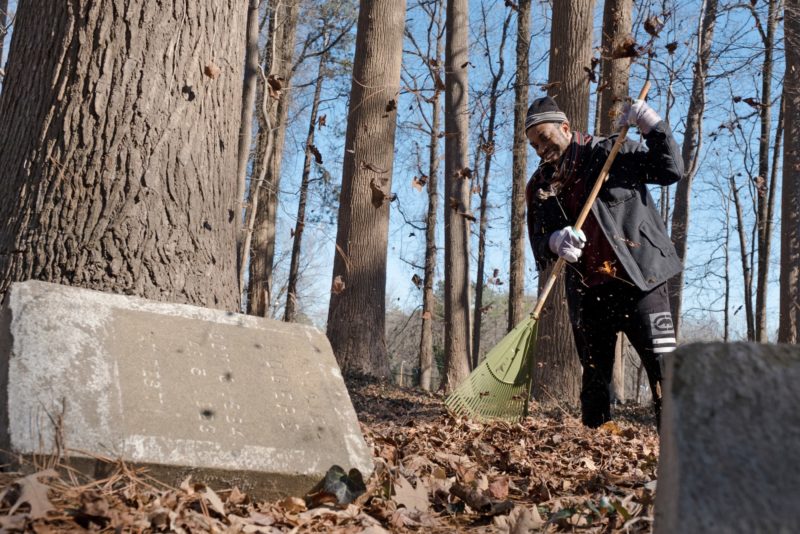
Once, when Raphael Morris was 10 years old, he and his father drove through Hillsdale, Missouri, just a few miles from their hometown, Pagedale, and stopped in front of Greenwood Cemetery. “You have family in there,” his father told him. As a child, Morris said, he didn’t think much of the news and didn’t think twice about the cemetery.
Until more than 50 years later.
Morris found himself back at the burial grounds in 2016 after seeing a news program about what poor condition the land was in. So, he traveled just 15 minutes from his home in Olivette to the cemetery to see for himself.
“It was absolutely nothing but a forest. You couldn’t see a single headstone on the property,” said Morris, now 69. By then, he said, Greenwood was mostly riddled with discarded mattresses, television sets, furniture, and other garbage dumped there over the years.
“Sometimes I think certain people will clean out their whole house and dump it in the cemetery,” he said.
With that, Morris retired from his job at a chemical company and devoted himself to restoring the cemetery. He, a historian, Etta Daniels, and a group of concerned citizens founded the Greenwood Cemetery Preservation Association. Morris said at least a dozen of his family members are buried there. But through the growth, debris, and garbage, he has only been able to find headstones for an uncle and a great-grandmother.
Follow Morris’s journey to clean up black cemeteries on NBC News.
Read about how black historical sites struggle to remain open. Keep an eye out for an upcoming exhibit about the first African American family buried in the United States, too.
More Breaking News here.
Comments Are Welcome
Note: We moderate submissions in order to create a space for meaningful dialogue, a space where museum visitors – adults and youth –– can exchange informed, thoughtful, and relevant comments that add value to our exhibits.
Racial slurs, personal attacks, obscenity, profanity, and SHOUTING do not meet the above standard. Such comments are posted in the exhibit Hateful Speech. Commercial promotions, impersonations, and incoherent comments likewise fail to meet our goals, so will not be posted. Submissions longer than 120 words will be shortened.
See our full Comments Policy here.