40 Acres and a Lie
Share
Explore Our Galleries









Breaking News!
Today's news and culture by Black and other reporters in the Black and mainstream media.
Ways to Support ABHM?
By Alexia Fernandez Campbell, April Simpson, Pratheek Rebala, Wesley Lowery, and Nadia Hamdon, Mother Jones
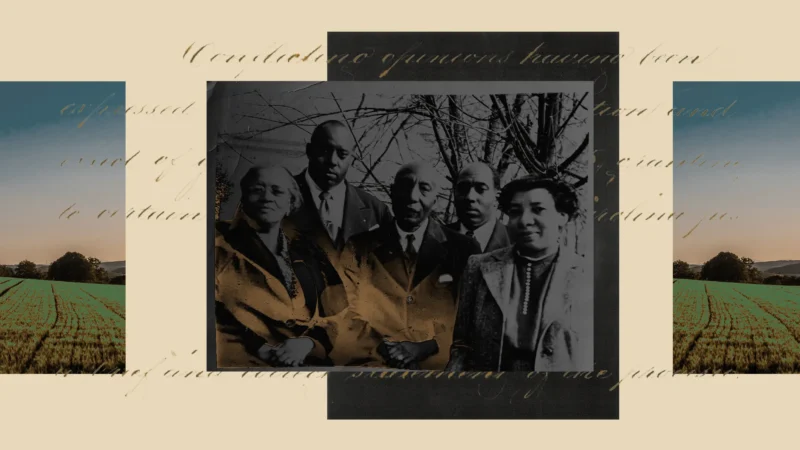
Black Americans have been demanding compensation and restitution for their suffering since the end of the Civil War.
40 Acres and a Mule remains the nation’s most famous attempt to provide some form of reparations for American slavery. Today, it is largely remembered as a broken promise and an abandoned step toward multiracial democracy. Less known is that the federal government actually did issue hundreds, perhaps thousands, of titles to specific plots of land between 4 and 40 acres. Freedmen and women built homes, established local governments, and farmed the land. But their utopia didn’t last long. After President Abraham Lincoln was assassinated, his successor, Andrew Johnson, stripped property from formerly enslaved Black residents across the South and returned it to their past enslavers.
Over the course of two and a half years, a team of Public Integrity reporters, editors, and researchers identified 1,250 Black men and women who had earned land as reparations after the Civil War. From there, the team conducted genealogical research to locate living descendants of many of those who had received and then lost the land. For the first time, these living Black Americans were made aware of the specific land that had been given to and then taken away from their ancestors.
This project is an unprecedented and innovative use of Freedmen’s Bureau records—an impossible task for most of American history, until recent advances in genealogical research and the digitization of thousands of pages of Reconstruction-era documents made it feasible.
Find the whole series on Mother Jones.
Discover more about Reconstruction.
Comments Are Welcome
Note: We moderate submissions in order to create a space for meaningful dialogue, a space where museum visitors – adults and youth –– can exchange informed, thoughtful, and relevant comments that add value to our exhibits.
Racial slurs, personal attacks, obscenity, profanity, and SHOUTING do not meet the above standard. Such comments are posted in the exhibit Hateful Speech. Commercial promotions, impersonations, and incoherent comments likewise fail to meet our goals, so will not be posted. Submissions longer than 120 words will be shortened.
See our full Comments Policy here.