When Jack Daniel’s Failed to Honor a Slave, an Author Rewrote History
Share
Explore Our Galleries
Breaking News!
Today's news and culture by Black and other reporters in the Black and mainstream media.
Ways to Support ABHM?
By: CLAY RISEN, New York Times

Lynchburg, TN – Fawn Weaver was on vacation in Singapore last summer when she first read about Nearest Green, the Tennessee slave who taught Jack Daniel how to make whiskey.
Green’s existence had long been an open secret, but in 2016 Brown-Forman, the company that owns the Jack Daniel Distillery here, made international headlines with its decision to finally embrace Green’s legacy and significantly change its tours to emphasize his role….
But when she got to Lynchburg, she found no trace of Green. “I went on three tours of the distillery, and nothing, not a mention of him,” she said.
[…]
Ms. Weaver dug in, determined to uncover more about Green and persuade Brown-Forman to follow through on its promise to recognize his role in creating America’s most famous whiskey.
[…]
Scouring archives in Tennessee, Georgia and Washington, D.C., she created a timeline of Green’s relationship with Daniel, showing how Green had not only taught the whiskey baron how to distill, but had also gone to work for him after the Civil War,…. the first black master distiller in America.
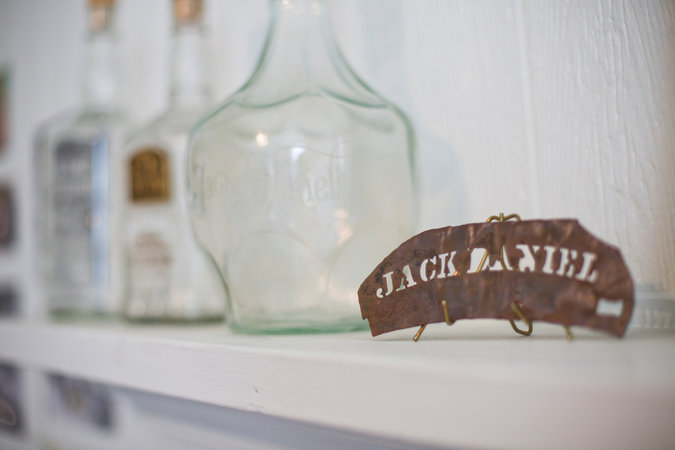
By her count, she has collected 10,000 documents and artifacts related to Daniel and Green, much of which she has agreed to donate to the new National Museum of African American History and Culture in Washington.
[…]
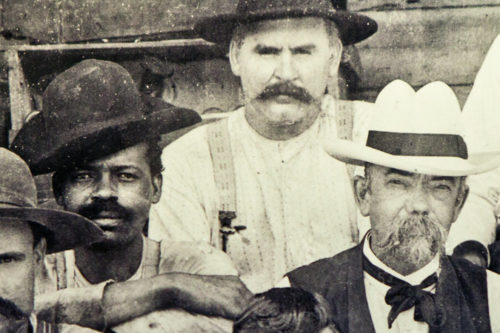
Green, already adept at distilling, took Daniel under his wing and, after the Civil War and the end of slavery, went to work for him in his fledgling whiskey operation.
Read full article here.
Read more on Green & Jack Daniel’s Distillery here.
Comments Are Welcome
Note: We moderate submissions in order to create a space for meaningful dialogue, a space where museum visitors – adults and youth –– can exchange informed, thoughtful, and relevant comments that add value to our exhibits.
Racial slurs, personal attacks, obscenity, profanity, and SHOUTING do not meet the above standard. Such comments are posted in the exhibit Hateful Speech. Commercial promotions, impersonations, and incoherent comments likewise fail to meet our goals, so will not be posted. Submissions longer than 120 words will be shortened.
See our full Comments Policy here.