Their homes were destroyed with little notice. Decades later, a settlement attempts to make amends.
Share
Explore Our Galleries









Breaking News!
Today's news and culture by Black and other reporters in the Black and mainstream media.
Ways to Support ABHM?
By Curtis Bunn, NBC
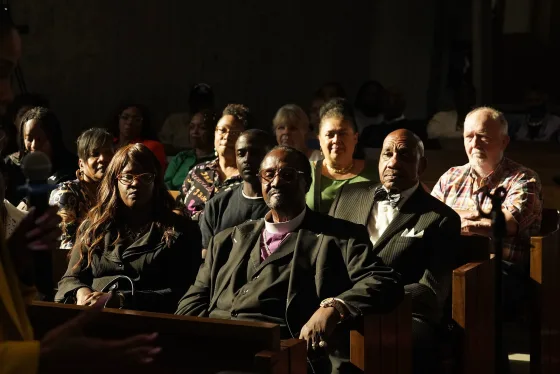
An image from Gloria Holland’s childhood remains clear in her mind: a man dressed only in his underwear, standing outside his front door pleading that his house in the Section 14 area of Palm Springs, California, not be demolished. The man ranted for several minutes until a bulldozer leveled the structure and he scampered to safety.
“I was 8 or 9 years old,” Holland, now 70, said from her home outside Atlanta. “It was the first time I saw a grown man cry. It was traumatizing.”
The man and Holland were among 195 Black and Latino families whose homes were bulldozed and burned to the ground with little-to-no notice in the late 1950s and early ’60s. The land, owned by Native Americans, had always been coveted by city officials, who wanted Palm Springs’ downtown area to grow with luxury hotels and shops in building up a city known as a celebrity playground about 115 miles east of Hollywood.
“On Friday, we were notified that we had to take anything we wanted out of the house by Monday — two days,” Holland said. “That was it. It was awful.”
In 2022, the Section 14 Survivors Group filed a complaint against the city, seeking restitution for the hundreds of homes lost and lives suddenly upended. Earlier this month, the Palm Springs City Council unanimously voted to approve a multilevel settlement offer to former residents and descendants of those who lived in the Black and Latino neighborhood.“It is the responsibility of the city of Palm Springs to compensate individuals for the destruction of personal property,” said council member Lisa Middleton during the hearing. “We broke something that was yours, and now we need to pay for it.”
Learn what 1,200 people will receive as part of the settlement.
See a previous article about this story.
Stop by our virtual exhibits for more Black history.
Comments Are Welcome
Note: We moderate submissions in order to create a space for meaningful dialogue, a space where museum visitors – adults and youth –– can exchange informed, thoughtful, and relevant comments that add value to our exhibits.
Racial slurs, personal attacks, obscenity, profanity, and SHOUTING do not meet the above standard. Such comments are posted in the exhibit Hateful Speech. Commercial promotions, impersonations, and incoherent comments likewise fail to meet our goals, so will not be posted. Submissions longer than 120 words will be shortened.
See our full Comments Policy here.