Students of color push back on calls for police in schools
Share
Explore Our Galleries


Breaking News!
Today's news and culture by Black and other reporters in the Black and mainstream media.
Ways to Support ABHM?
By Annie Ma, AP News
After the mass shooting at a Texas elementary school, schools around the country pledged to boost security measures and increased the presence of law enforcement on campus — partly to reassure parents and students.
But police inside schools can make some students more uneasy, not less. Especially for Black students and other students of color, their personal experiences with policing can leave them feeling unsafe and alienated from school when they see officers on campus.
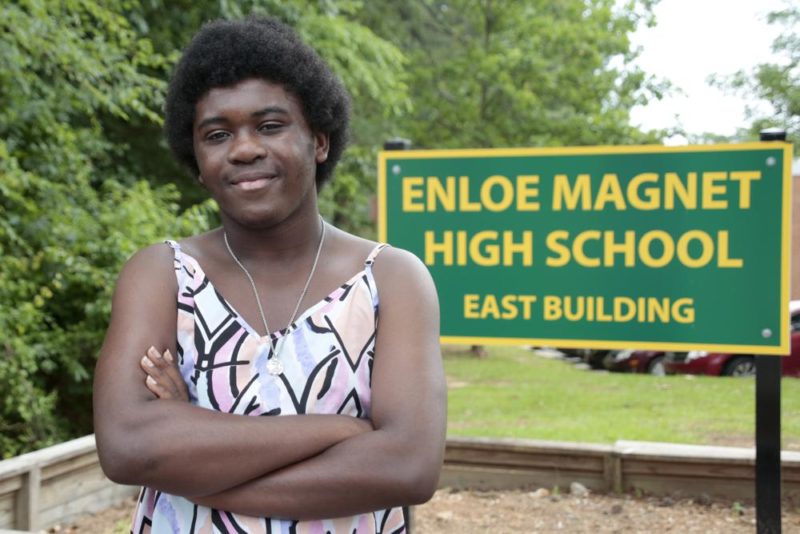
High school senior Malika Mobley has seen three different school resource officers patrolling the campus in Raleigh, North Carolina. Once on the way home from school, Mobley saw officers detain a visibly distraught classmate and push the student into the back of a police vehicle.
“They were crying, ‘Why are you doing this to me? I didn’t do anything,’” said Mobley, co-president of Wake County Black Student Coalition. “I was just forced to stand there and couldn’t do anything.”
Since 2020, the student group has advocated for eliminating police officers from school buildings in favor of investing in counselors and support staff for students.
“We don’t see police presence as part of the solution,” Mobley said. “If you really think about why police don’t make us safer, you can draw connections to all types of tragedies that impact the most marginalized among us.”
Discover more about this student activism.
Opponents of police in schools may be right. When LA schools redirected police funds and focused on mental health, students felt safer.
Stay up to date with racial activism by following ABHM’s breaking news.
Comments Are Welcome
Note: We moderate submissions in order to create a space for meaningful dialogue, a space where museum visitors – adults and youth –– can exchange informed, thoughtful, and relevant comments that add value to our exhibits.
Racial slurs, personal attacks, obscenity, profanity, and SHOUTING do not meet the above standard. Such comments are posted in the exhibit Hateful Speech. Commercial promotions, impersonations, and incoherent comments likewise fail to meet our goals, so will not be posted. Submissions longer than 120 words will be shortened.
See our full Comments Policy here.